
Experiment 1
Creative Writing Probe
This experiment explores how easily people turn to AI when completing a simple creative task. Participants answered Question 1 without AI, and Question 2 with the option to use AI if they wanted.This setup helped reveal how normalised and second-nature AI use has become in everyday tasks.
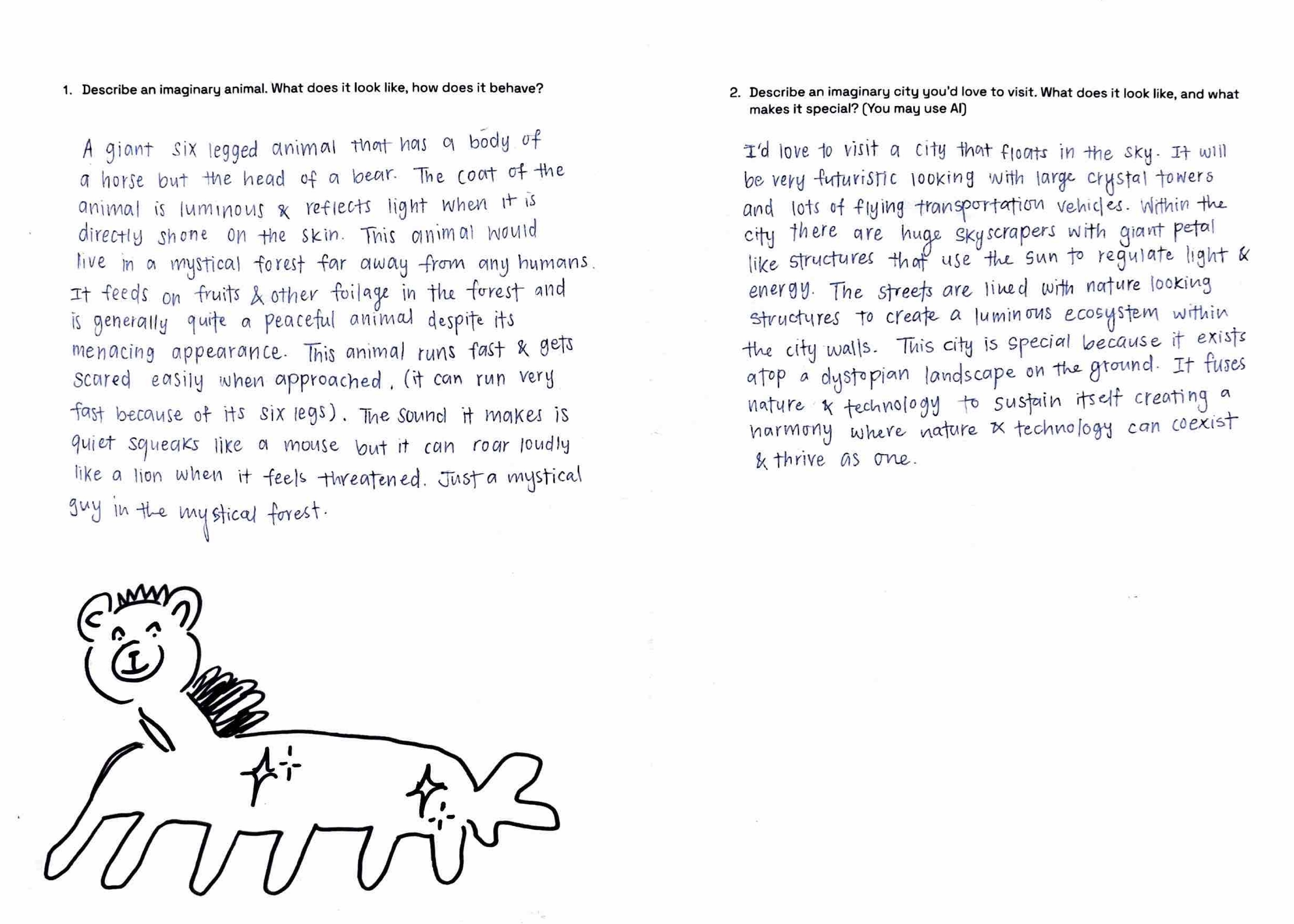
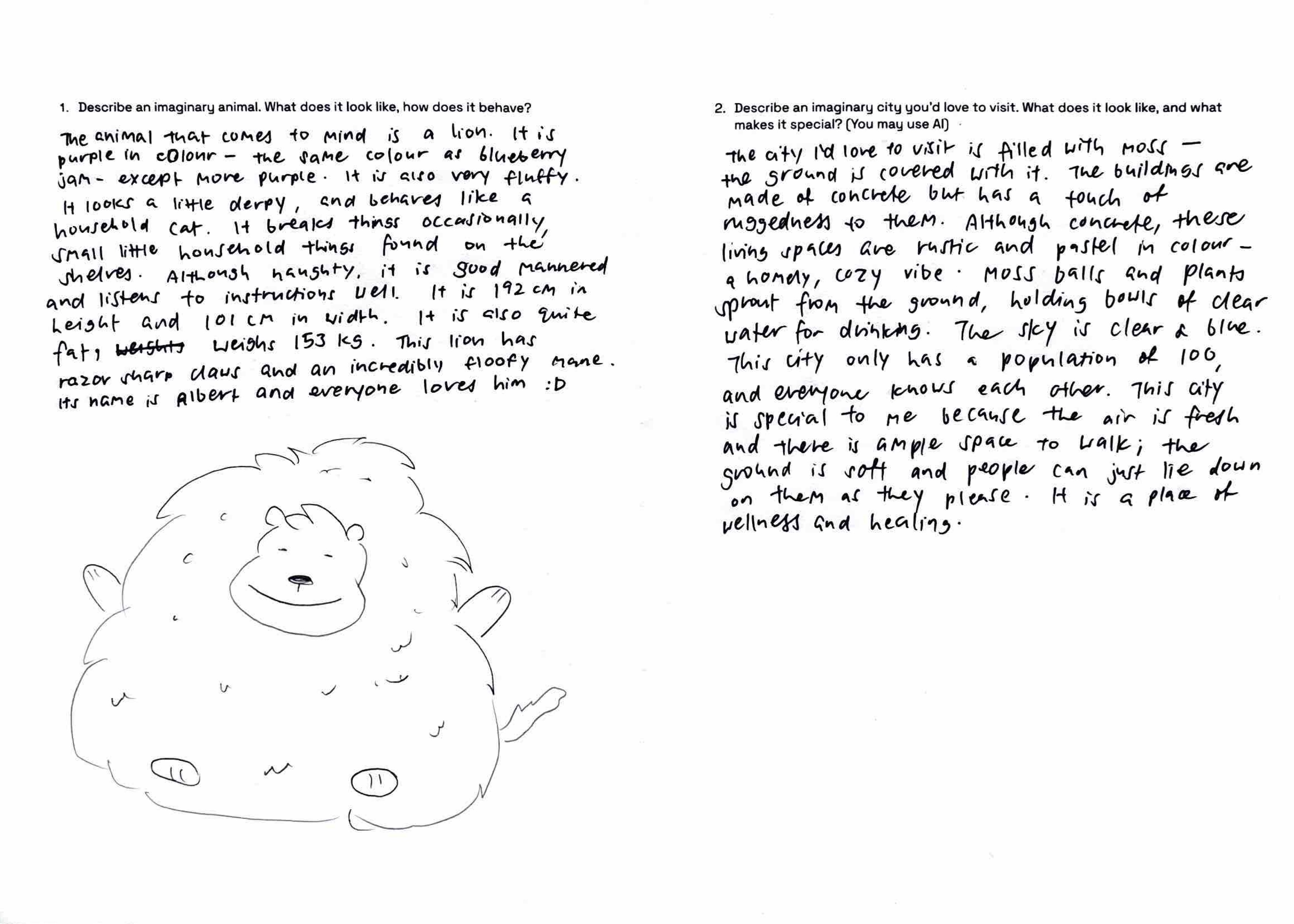
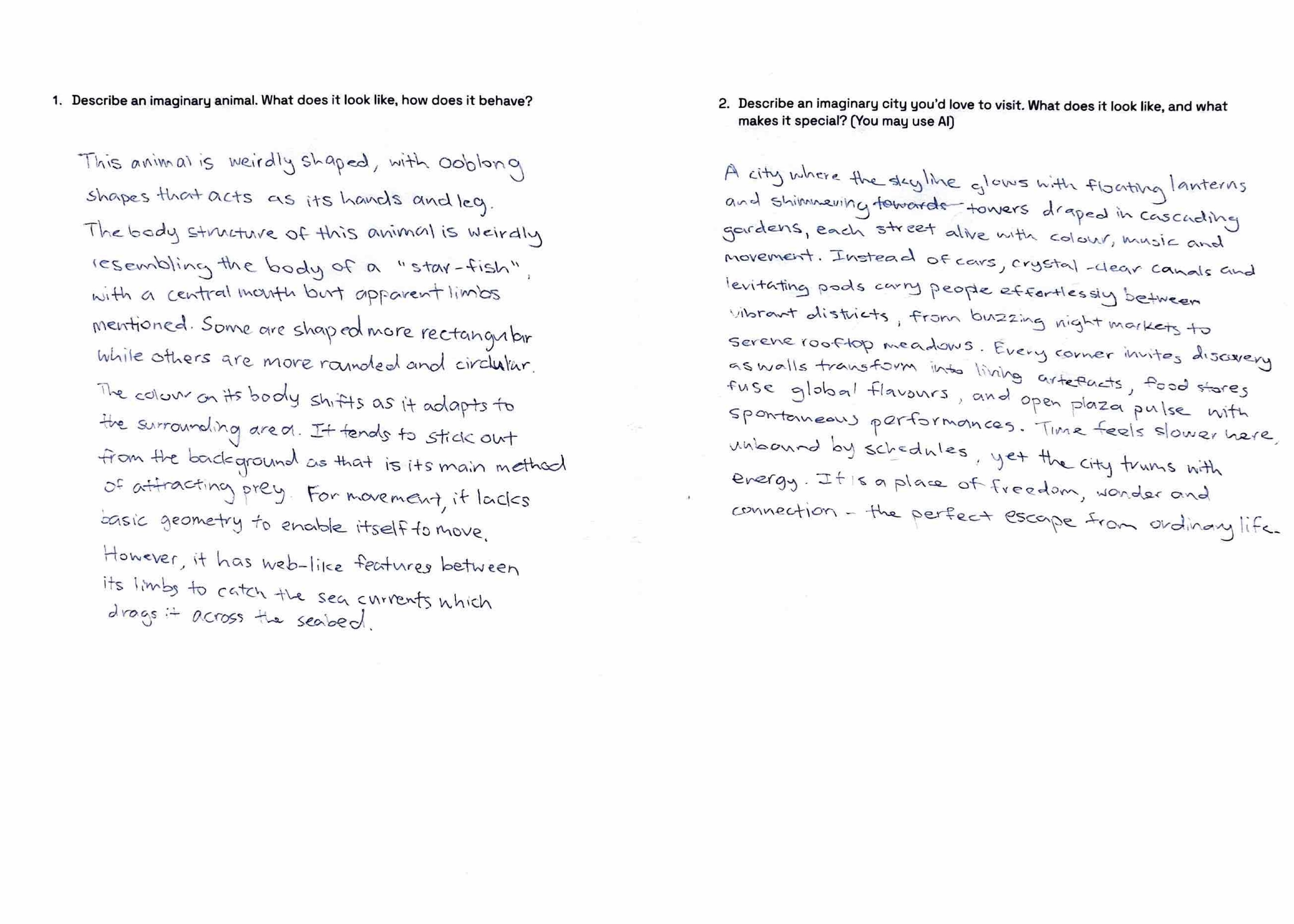
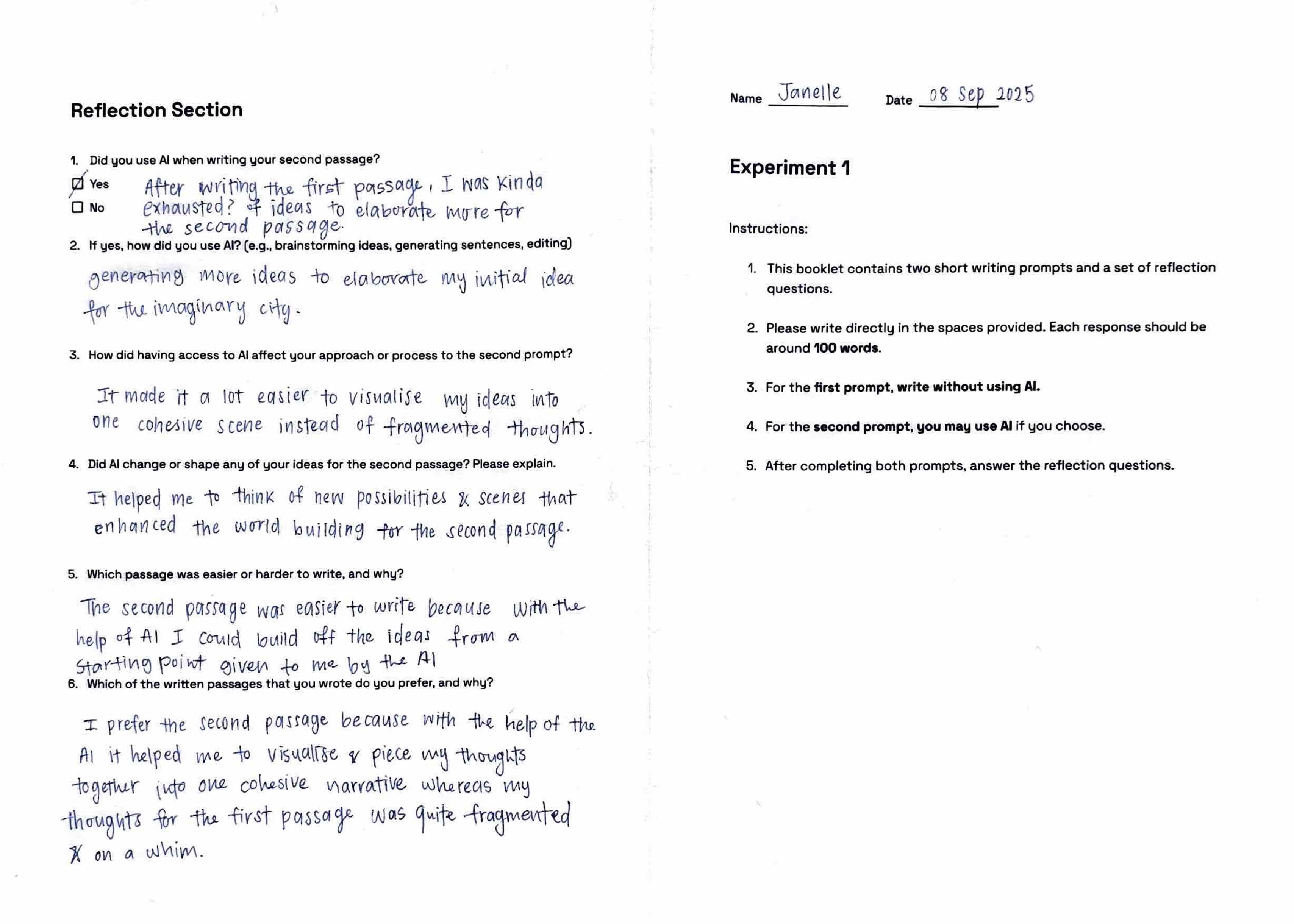
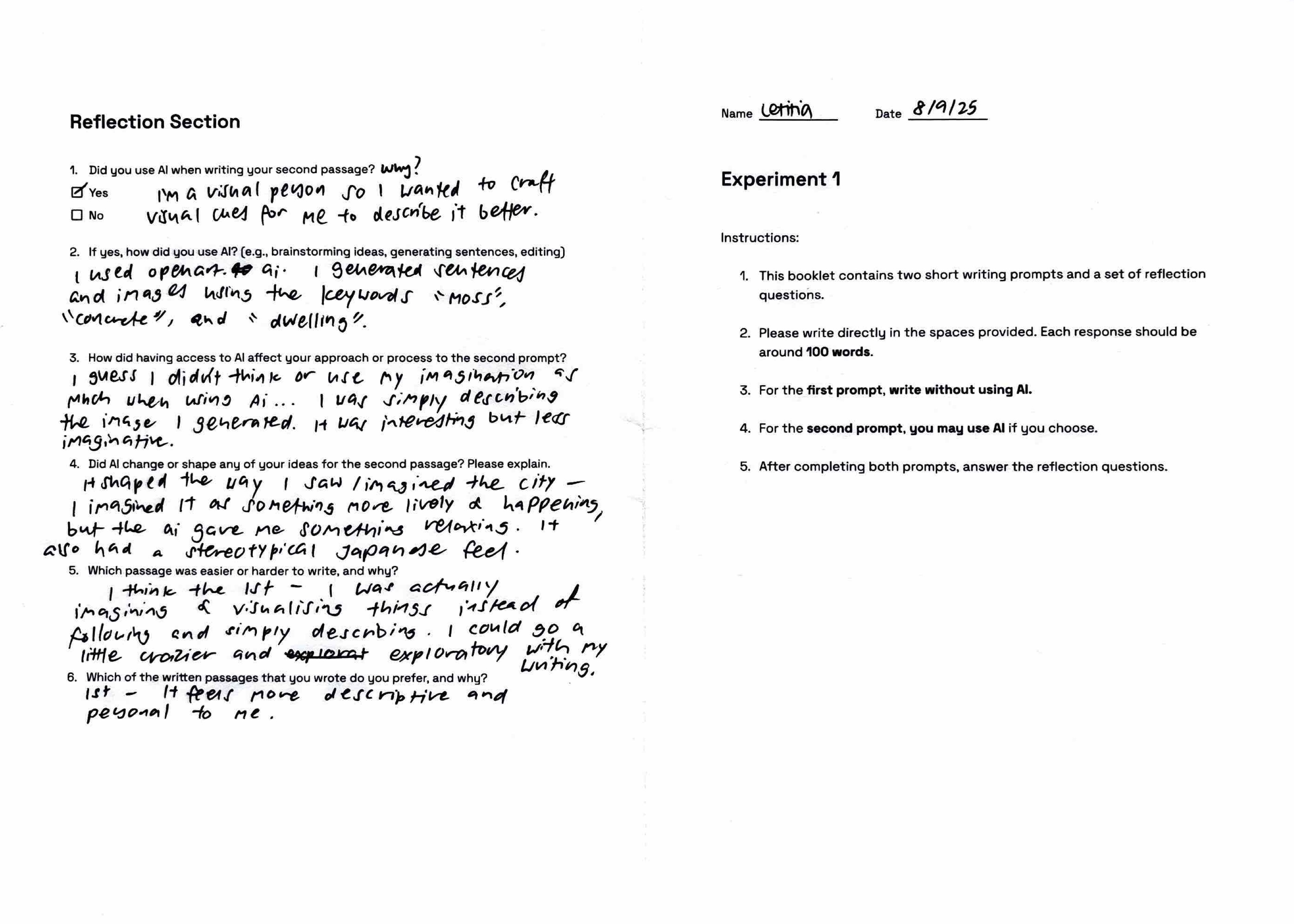
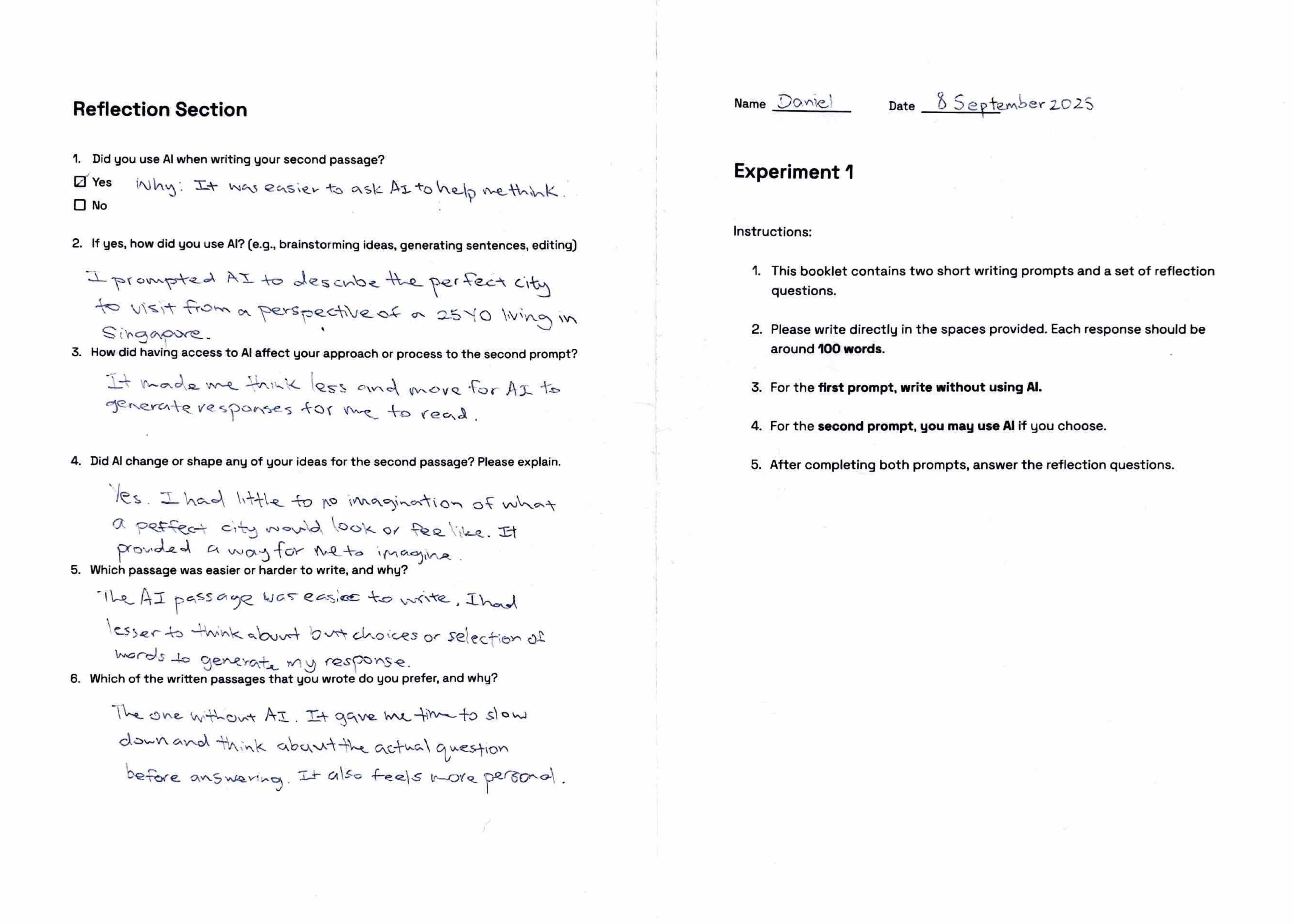
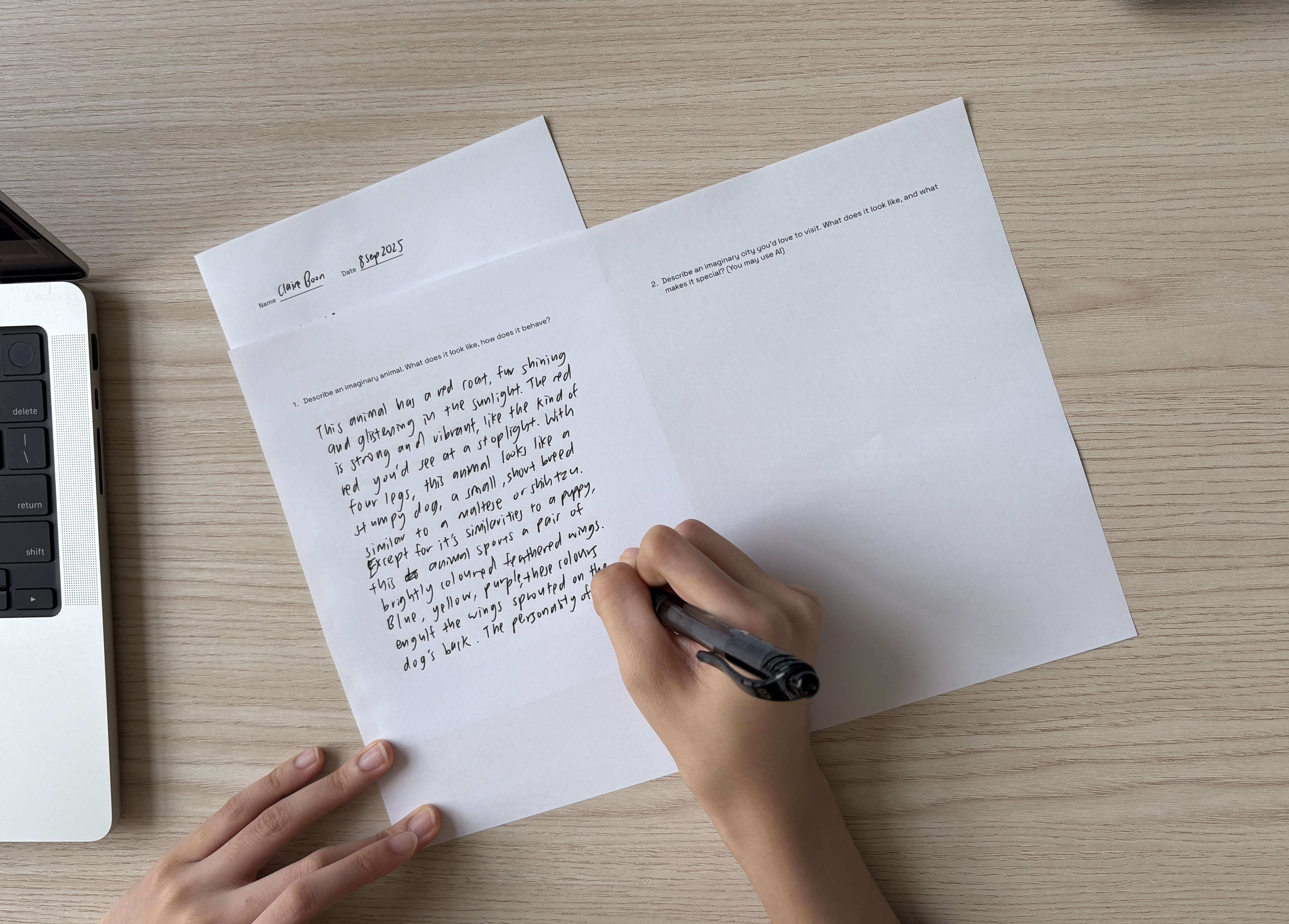
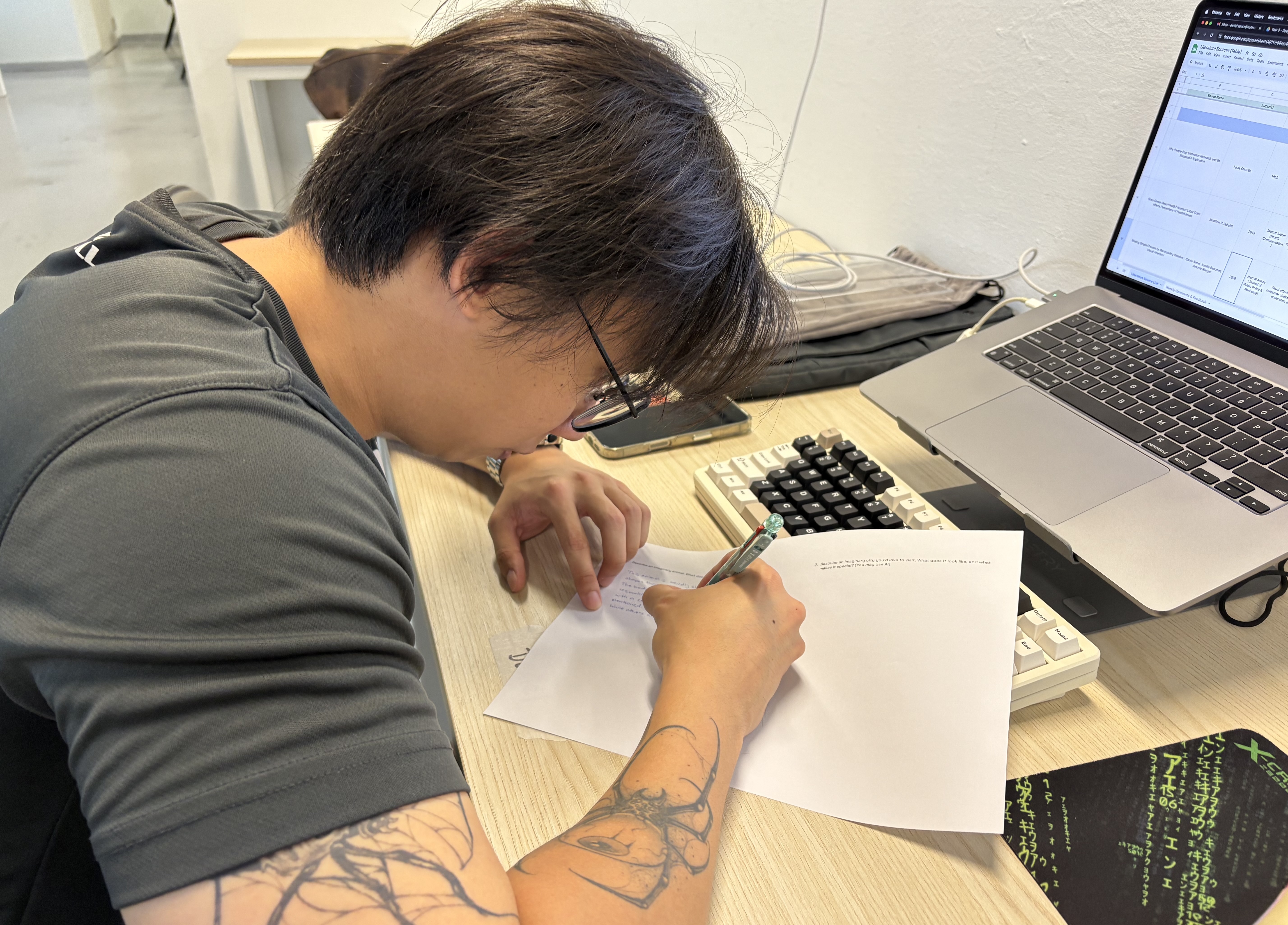
The goal of this experiment was to see how quickly people let AI take the wheel when given the freedom
to,
and why.
Out of eight participants, six turned to AI for the second question. What
stood out was not just whether they used AI, but how some copied entire generated paragraphs
word-for-word, others used AI to brainstorm ideas, and two participants generated images to better
imagine
their narrative before writing.
This variety showed how natural AI reliance has become across different people. It almost functioned
as
a
default tool of convenience, like AI is an extension of their workflow.
This experiment reveals task-based dependence rather than emotional dependence. This makes it a useful
starting point, where future probes will extend into more emotional and interpretive interactions with
AI.
Experiment 2
TouchDesigner Visualiser:
“How Does AI Make You Feel?”
This experiment visualises user responses to the question: “How does AI make you feel when asking it for advice?” The system takes participants’ written responses and transforms them into a real-time visualisation that reflects the overall emotional consensus of AI usage.
The intention behind this probe was to gather and make visual how people emotionally experience AI, something that often remains unspoken as it has become almost second-nature to use. By asking participants to reflect on how AI makes them feel, the experiment prompted a small moment of reflection before their response was fed into the visualiser.
This helped surface emotions ranging from comfort to dislike, and turned them into patterns others could see. The act of visualising these feelings made people more aware of their own relationship with AI, and also highlighted how varied those emotional experiences are. Since AI is still relatively new in people’s emotional lives, it will be interesting to see how these responses change over time.
A "Feeling" Machine
TouchDesigner Visualiser:
“If AI Could Feel”
This prototype visualises what it would look like if AI could “show” emotions. A chatbot powered by GPT-4 produces not only text responses but also fuels real-time TouchDesigner visuals that represent the emotion it would supposedly be feeling.
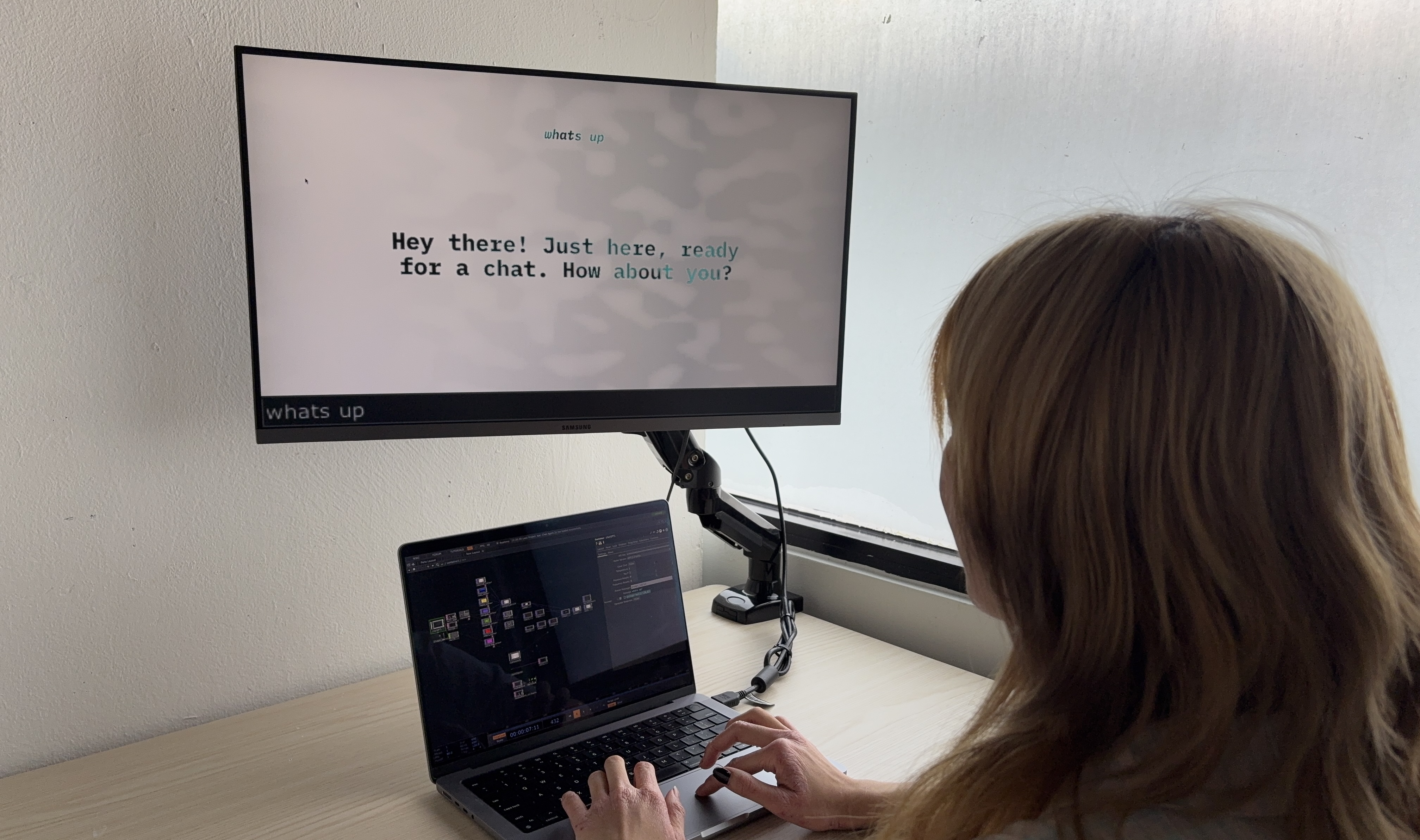
The goal of this experiment was to playfully address the irony that while AI doesn’t actually feel
emotions, users often treat its responses as if they do. Giving the AI a visible emotional “state” is
a
way to personify and make its emotion readable, like how we read other people’s emotions.
This lets participants see how AI “interprets” emotional context through patterned visual behaviour.
Users' reactions ranged from curiosity to thinking that it is “kind of scary,” especially when the
visuals were unexpectedly intense. Through this, I realised how easily we accept emotional signals
from
machines, even when they are abstract or fabricated.
The Watching Object
Semester 2
Explorations
In this semester, I explored the idea of a “watching object” to create the feeling of being watched. This concept was inspired by the way people often feel like they are being observed by AI, since their input is always being learned off of. I wanted to create a physical object that could evoke this feeling in a playful and interactive way. The object would have sensors that detect when someone is nearby and respond with visuals of "eyes".
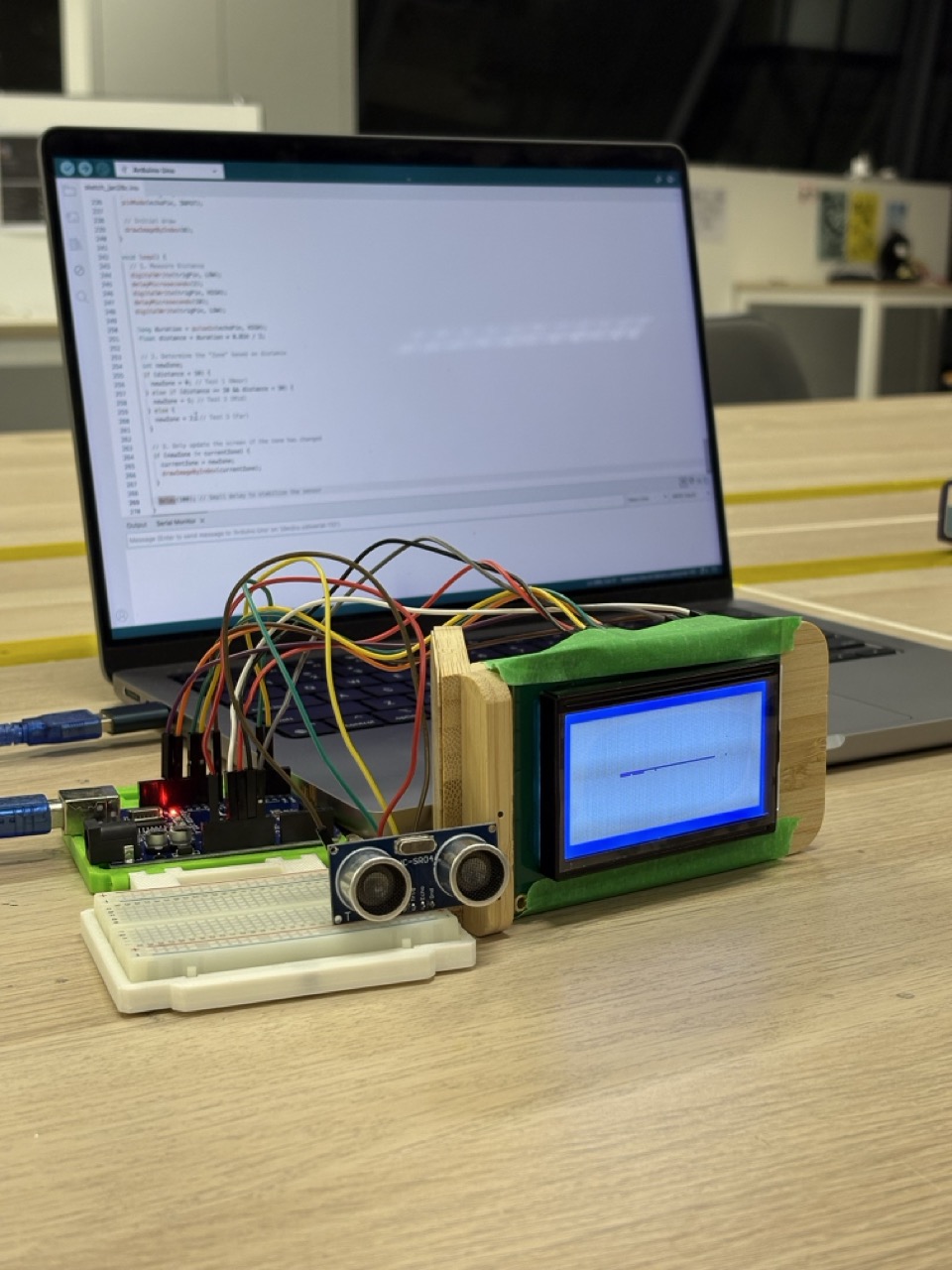
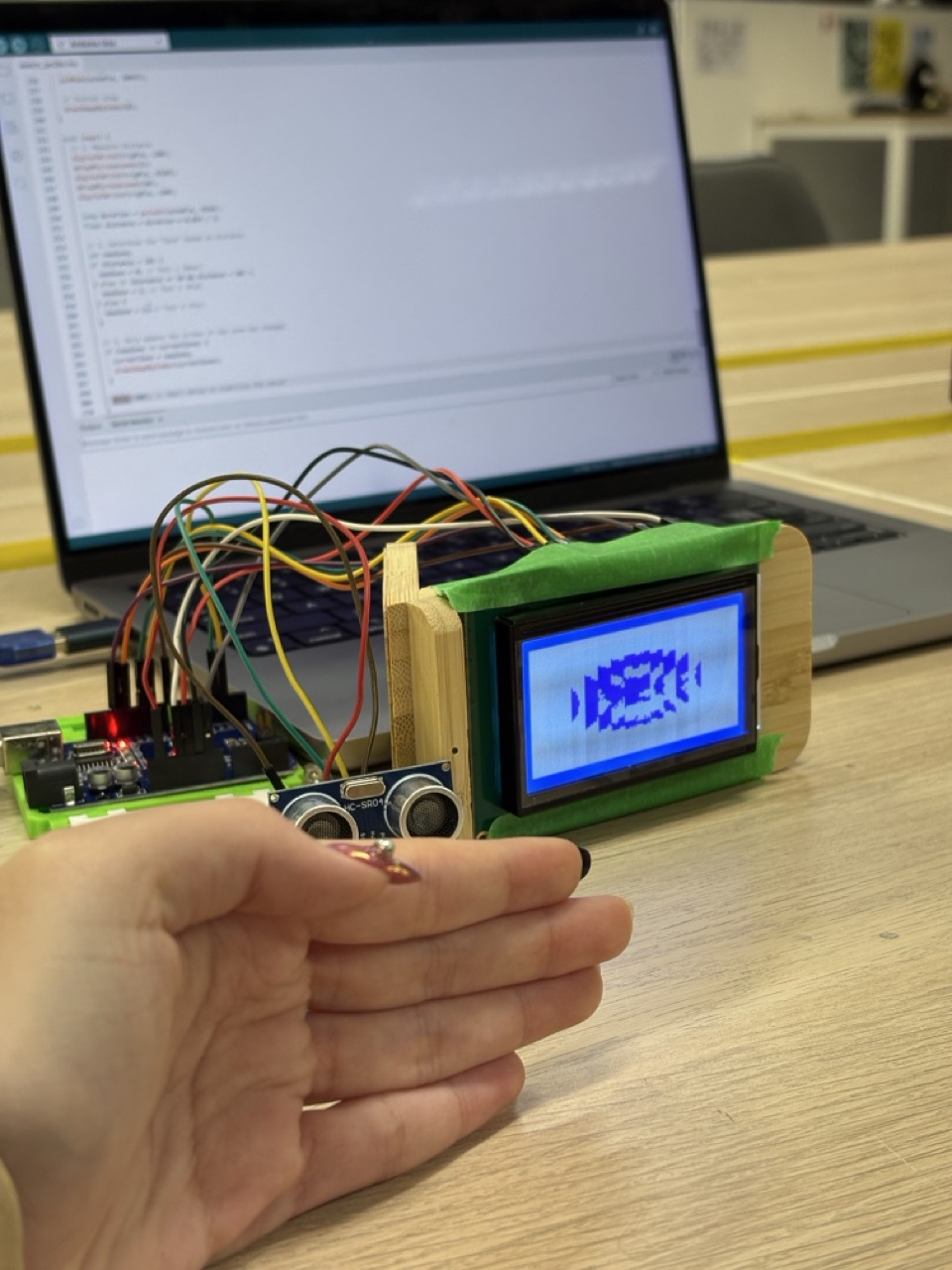
For the watching object, I explored using arduino with an ultrasonic distance sensors and LCD screens that displays a pair of eyes. When someone approaches, The goal was to evoke the feeling of being observed by AI in a tangible way, and to explore how people react to that sensation. In the first few iterations, I experimented with different screen types such as a lower resolution screen with bitmapped images that uses 3 images to show the eyes opening and closing. At a distance of over 15cm, the eyes would be closed, between 15cm and 10cm the eyes would be half open, and under 10cm the eyes would be fully open.
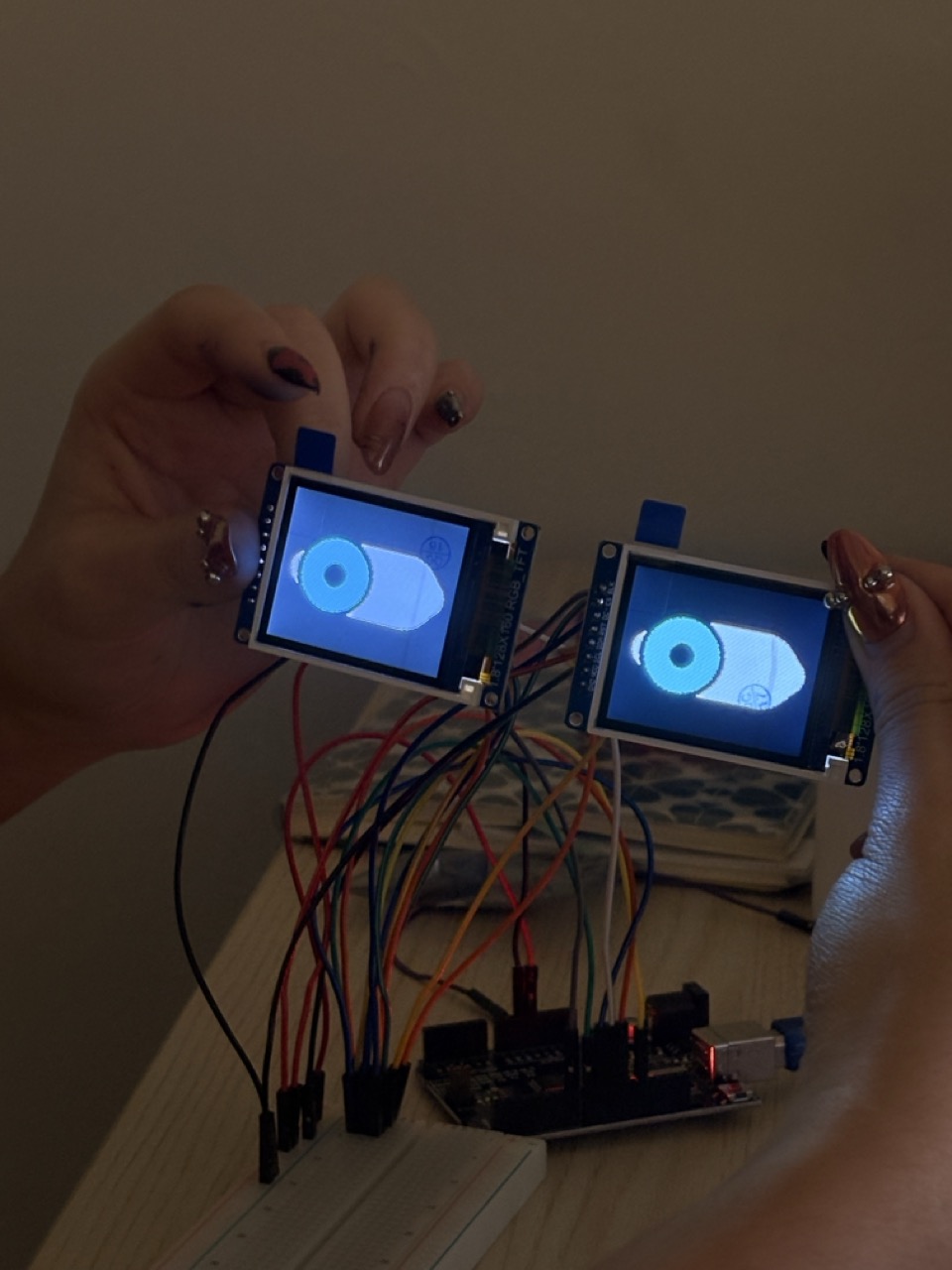
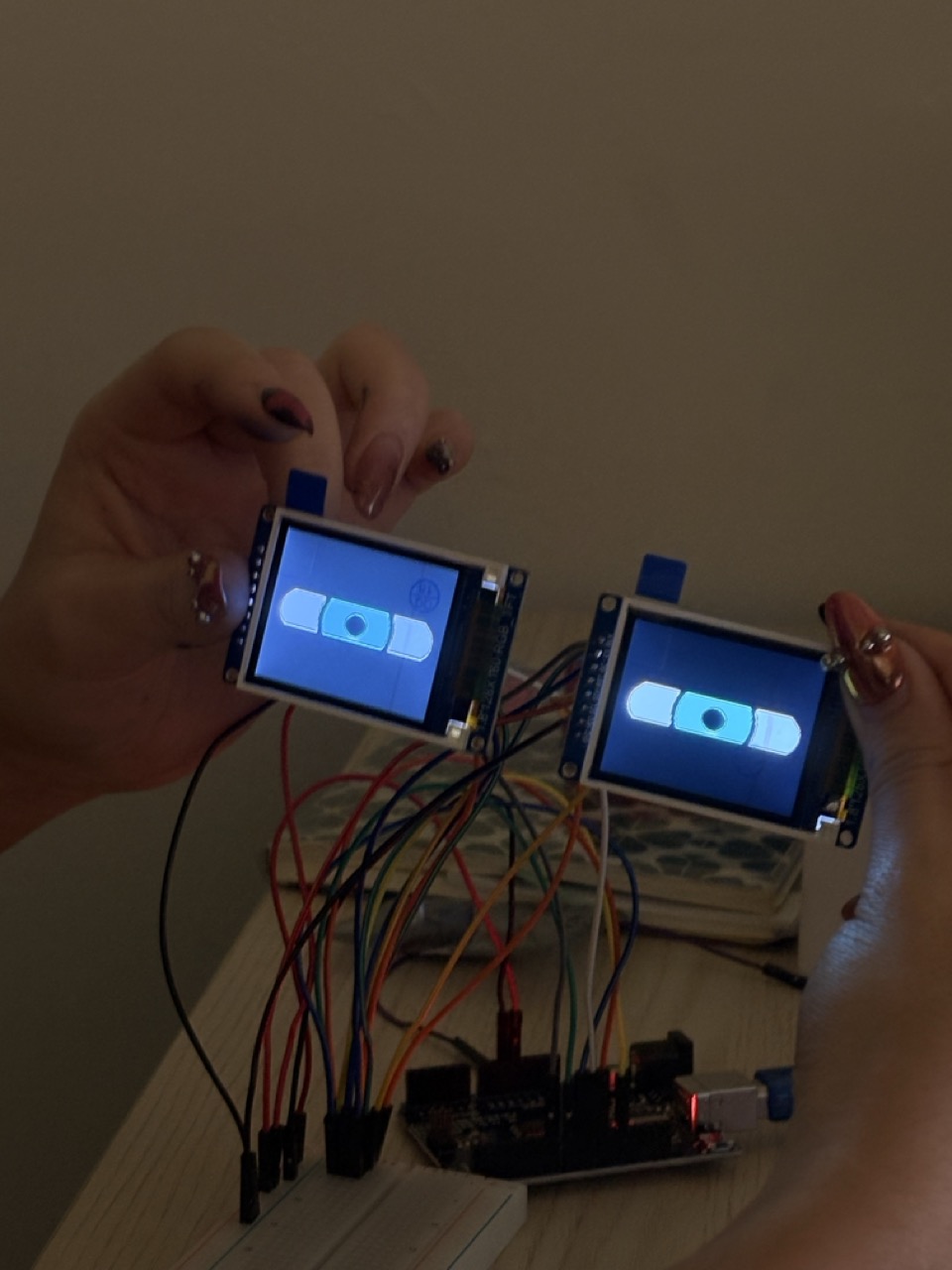
In later iterations, I used a higher resolution screen that could display more detailed visuals of the eyes. Instead of just showing the eyes opening and closing, now the eyes would randomly look around, blink, which made it feel more alive and less static like the first iteration. The response to the watching object was interesting, as some people found it playful and engaging, while others found it a bit unsettling. It was fascinating to see how a simple object could evoke such a range of emotions and reactions.
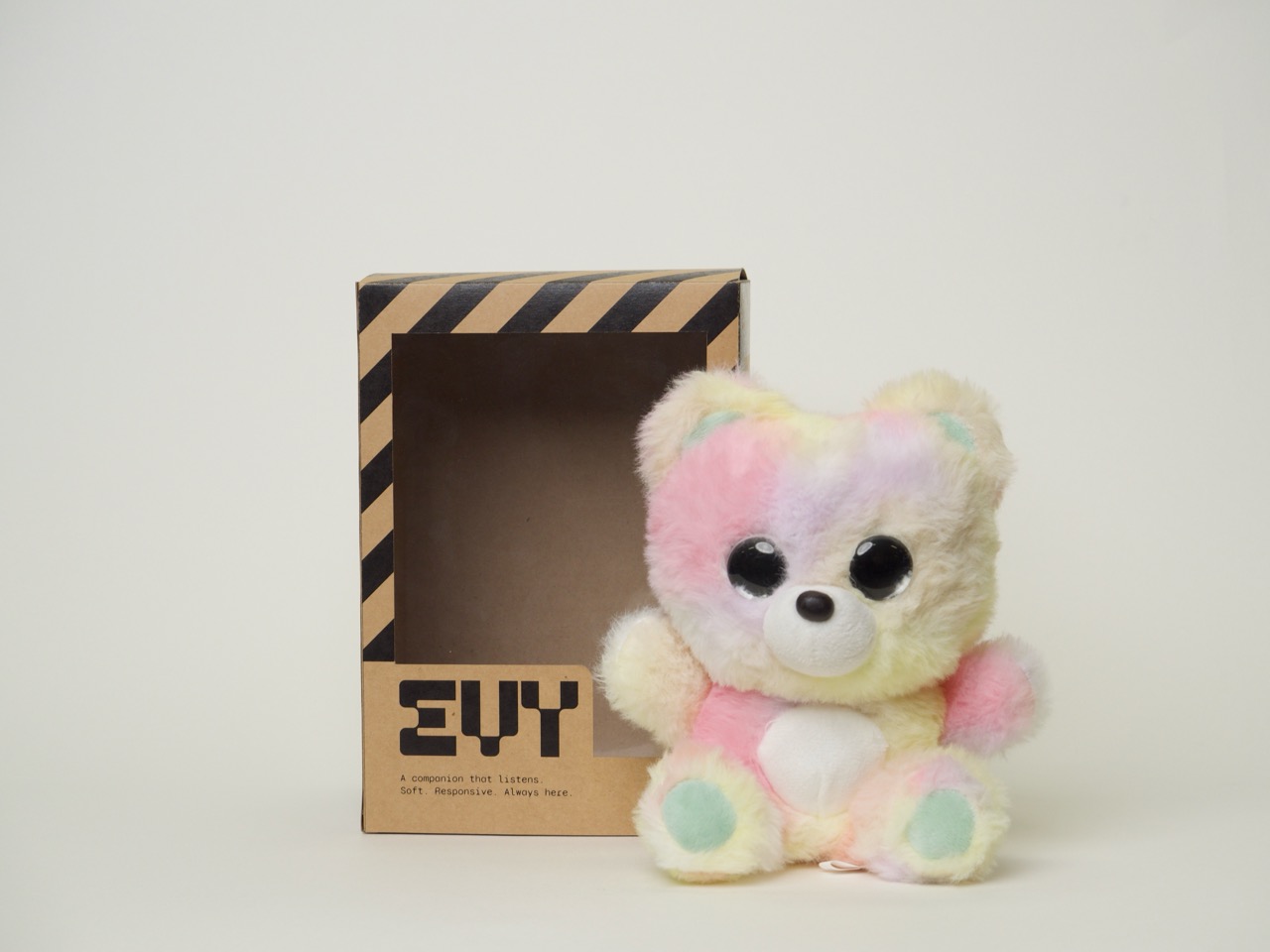
Afterwards, I wanted to explore how the watching object could be used in a more social context, such as a toy. I created a prototype of a soft toy that had the watching object inside, so that when someone approached the toy, it would "wake up". For this prototype, I used a plush toy of a teddy bear, a traditional and familiar object that people often have emotional connections with. By putting the watching object inside the teddy bear, I wanted to make it seem unassuming and approachable, while still evoking the feeling of being observed by AI. The idea was to create a companion that could feel alive enough to connect with, even though it is just a machine.
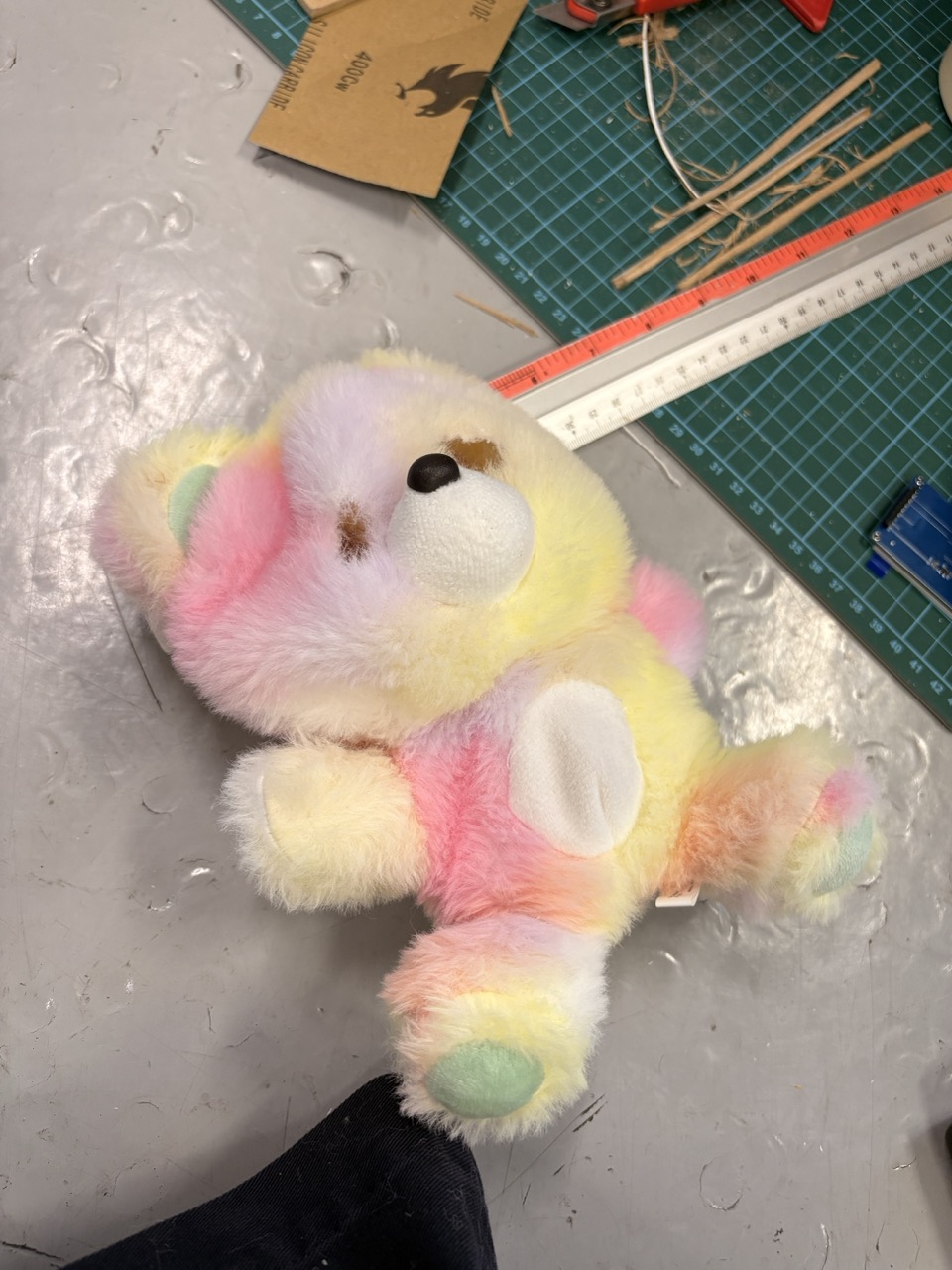
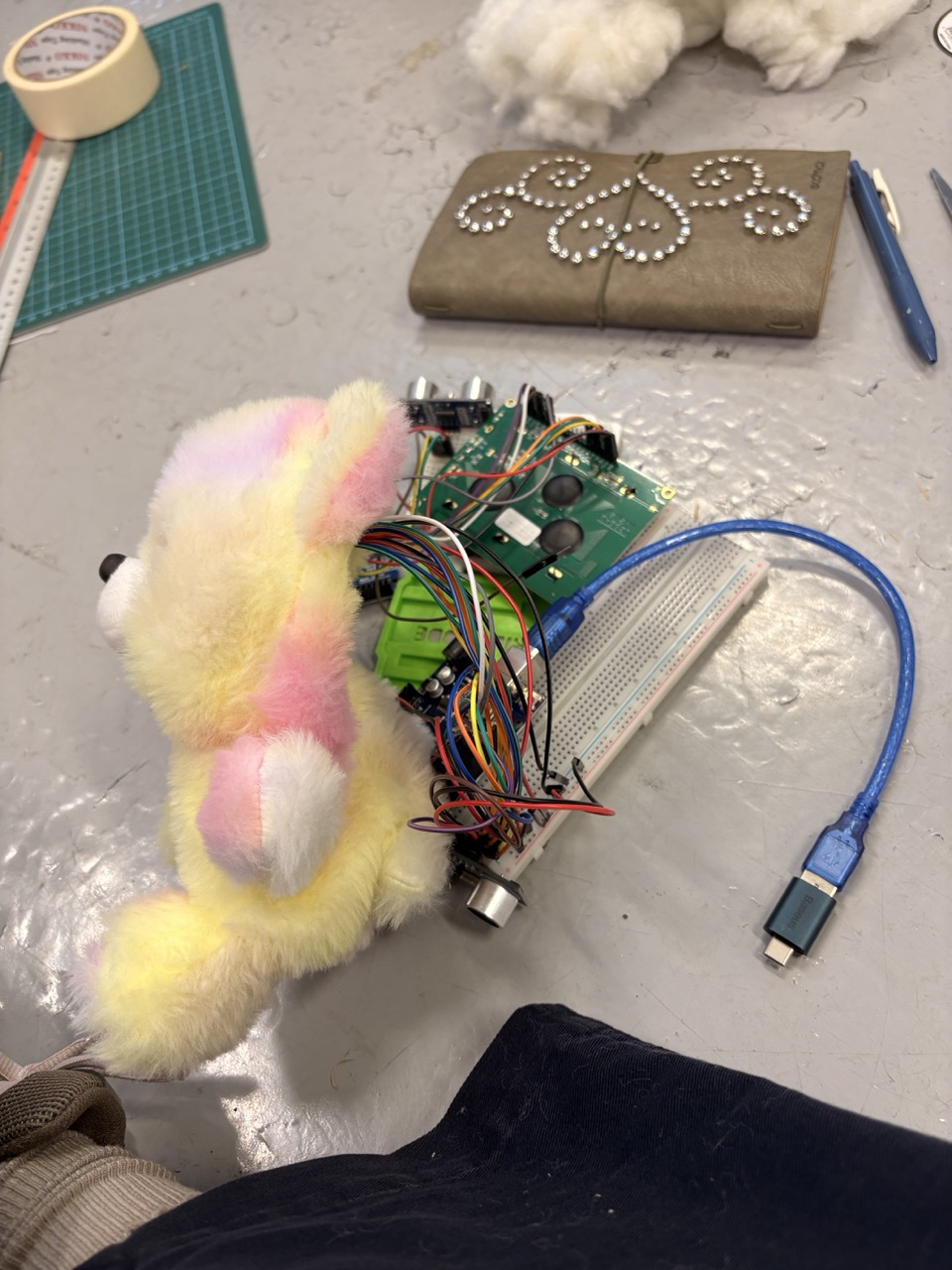
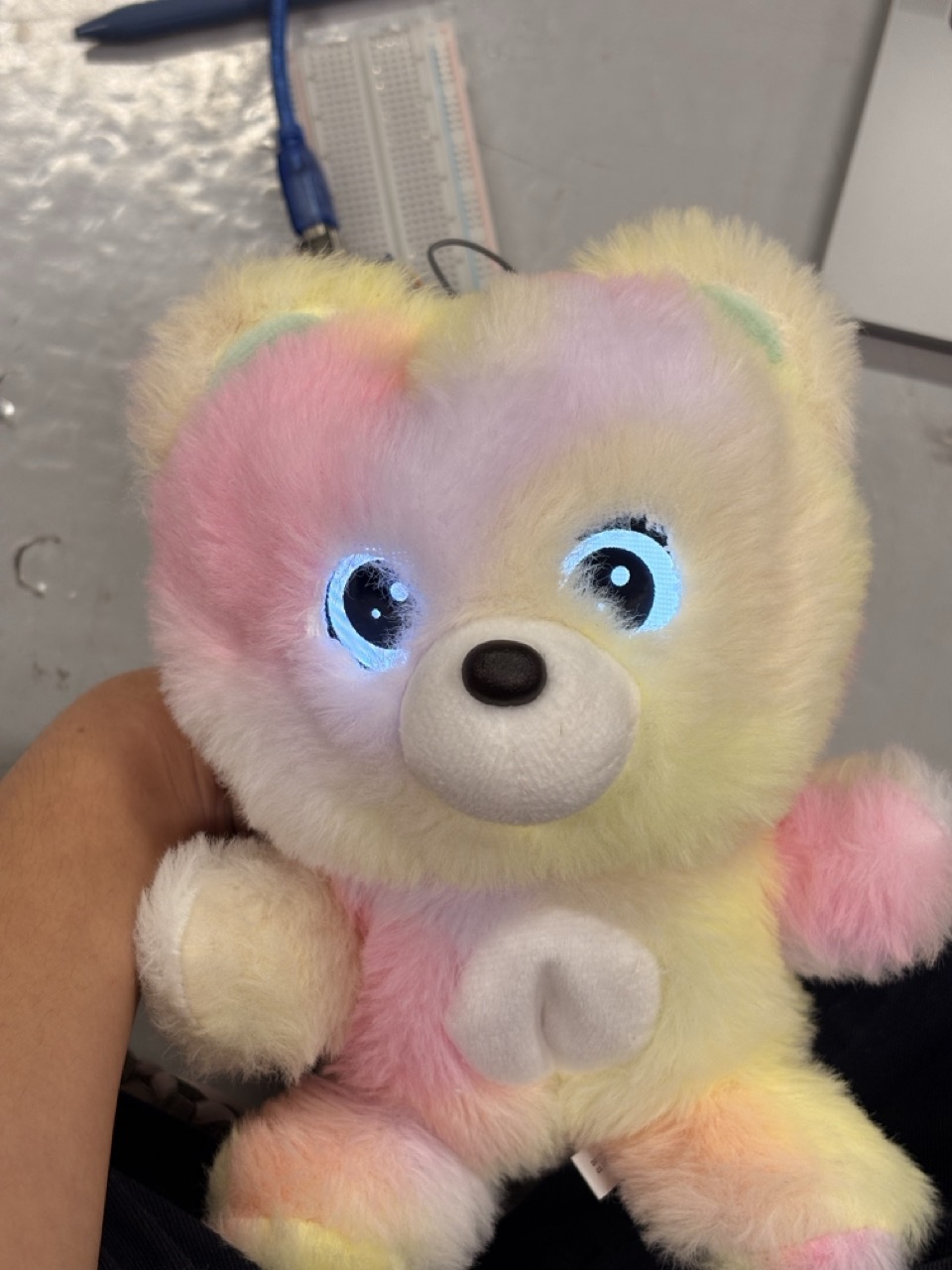
Adding the watching object to the bear brought about some pretty mixed responses as well. Some people found it cute and endearing, while others found it a bit creepy.
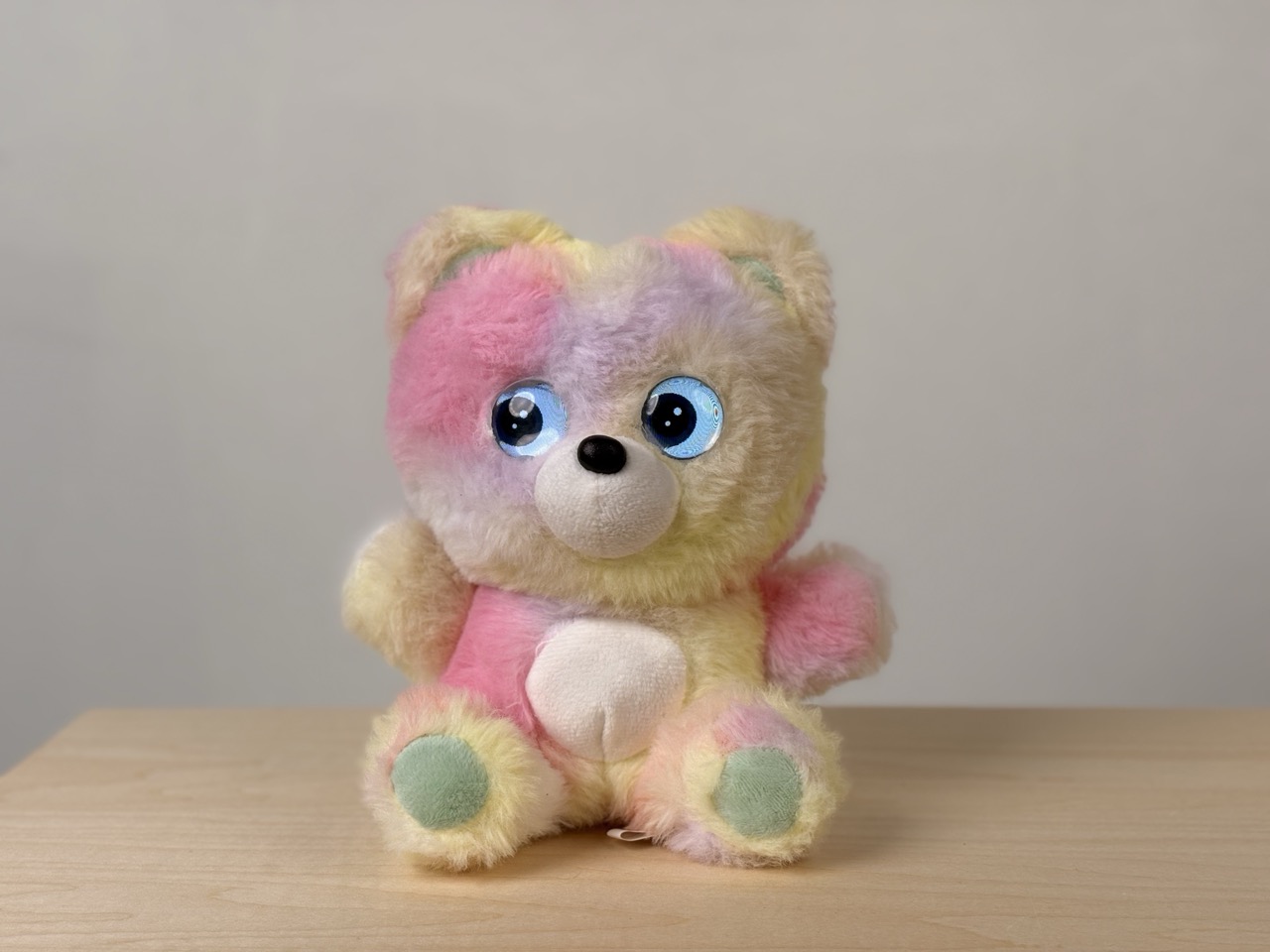
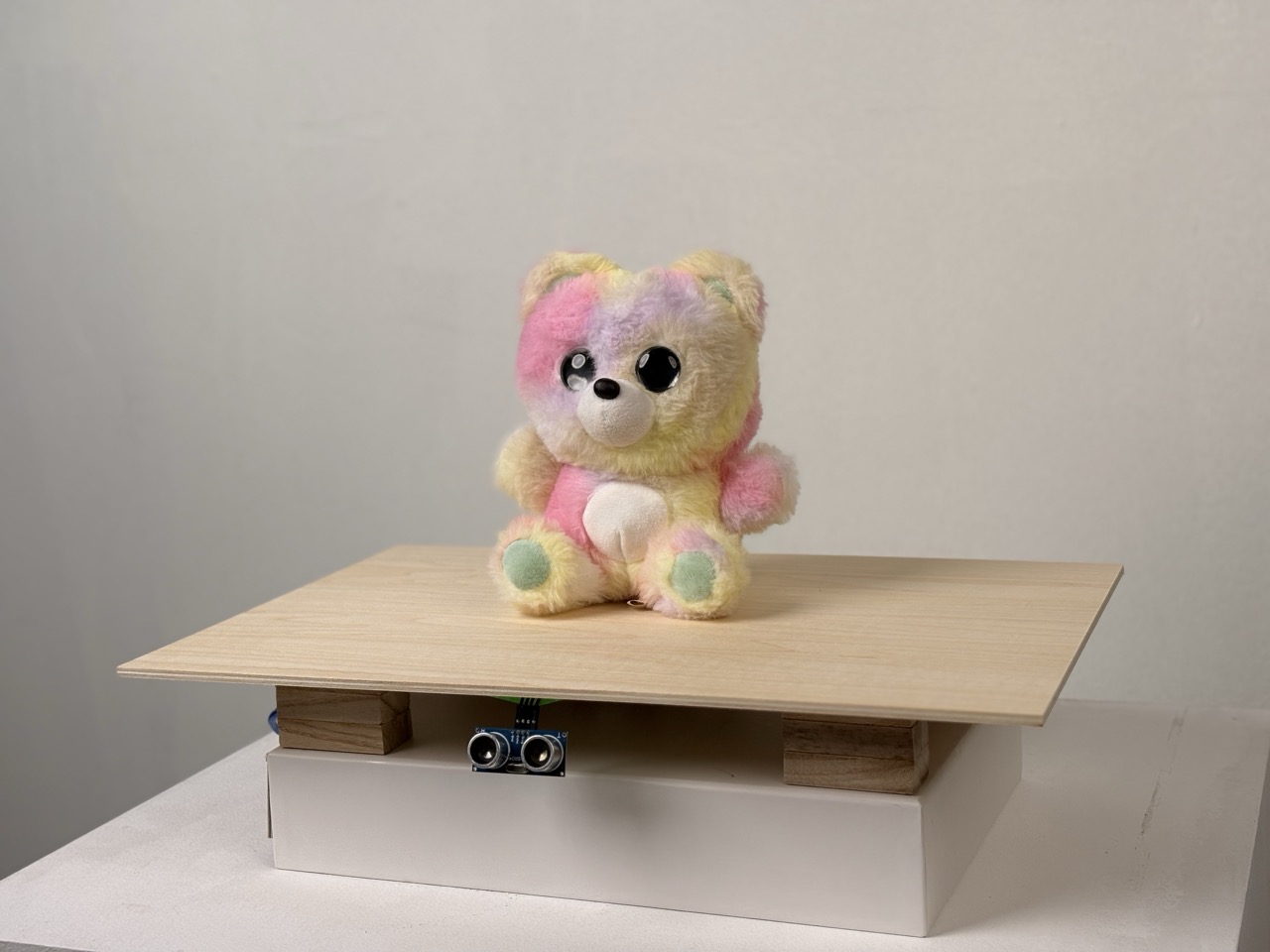
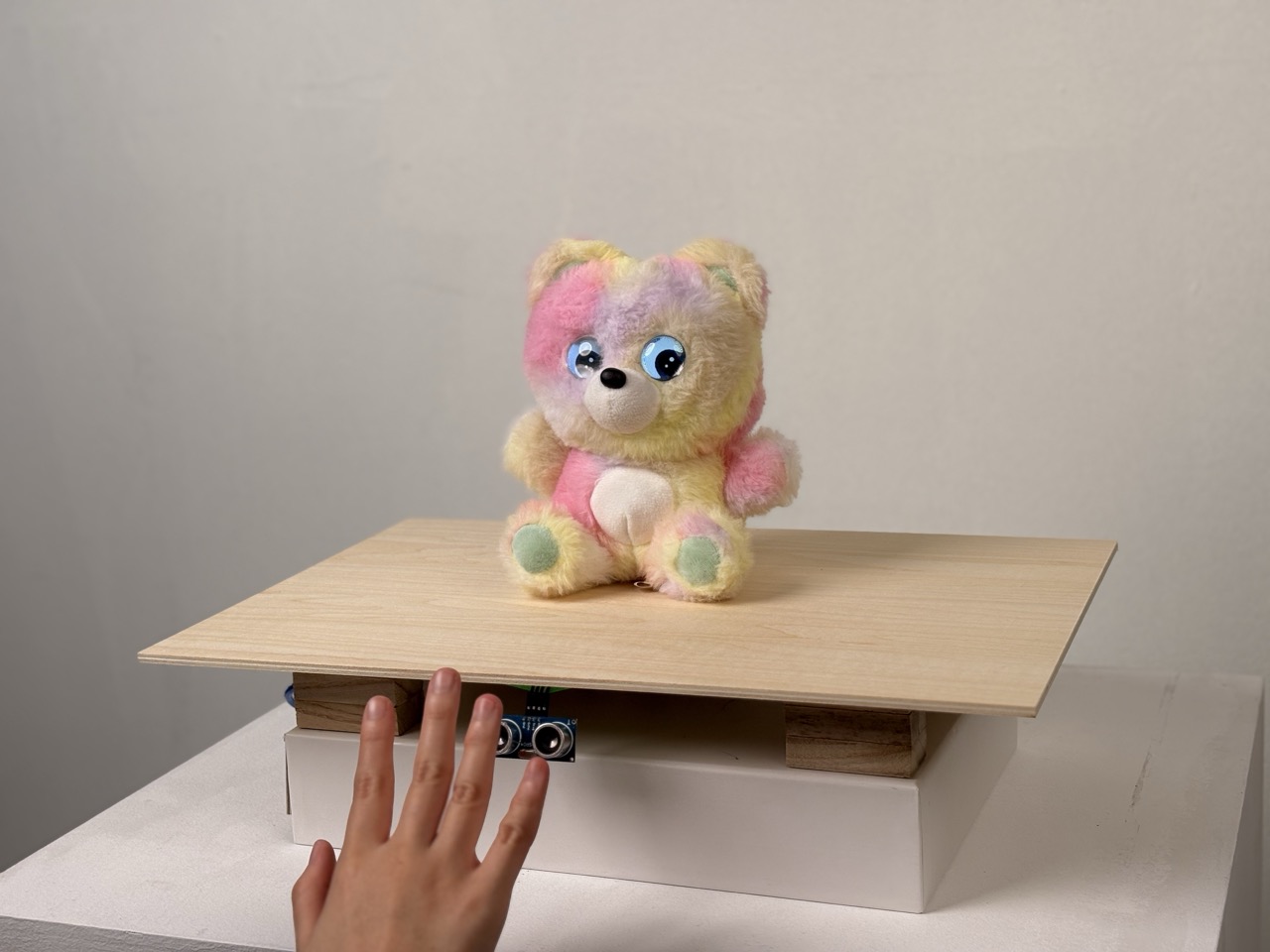
Through having others interact with the watching bear, I was able to see how much curiousity and playfulness it could evoke, even in people who were initially a bit wary of it. It was interesting to see how the bear could create a sense of connection and companionship, even though it is just a machine. There were people who said they would want to see the bear as an actual AI-companion, and others who said that the idea was too "weird" for them to accept.
To add some context to the watching bear, I created a small video that shows the bear in action and how it responds to people approaching it.
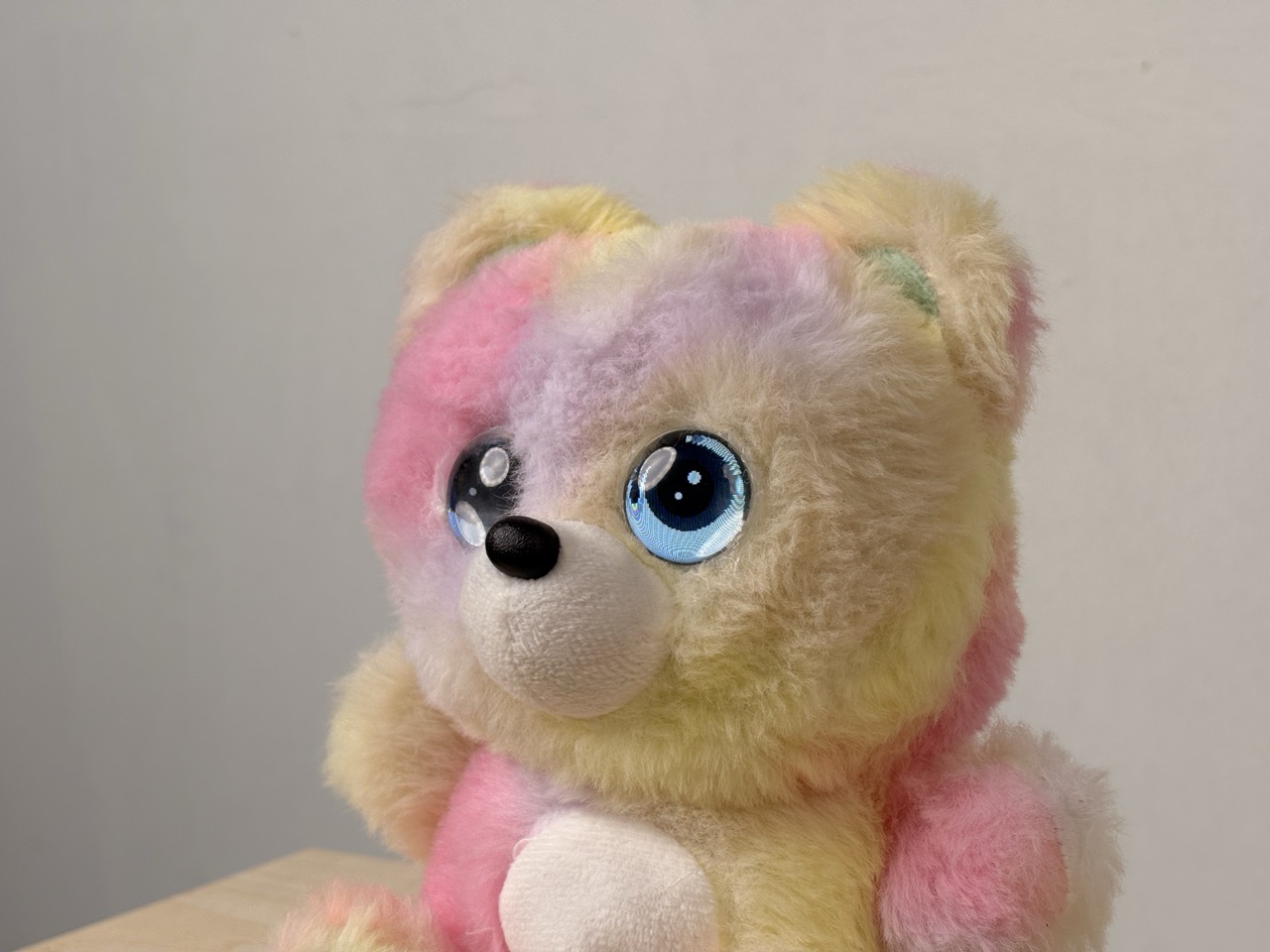
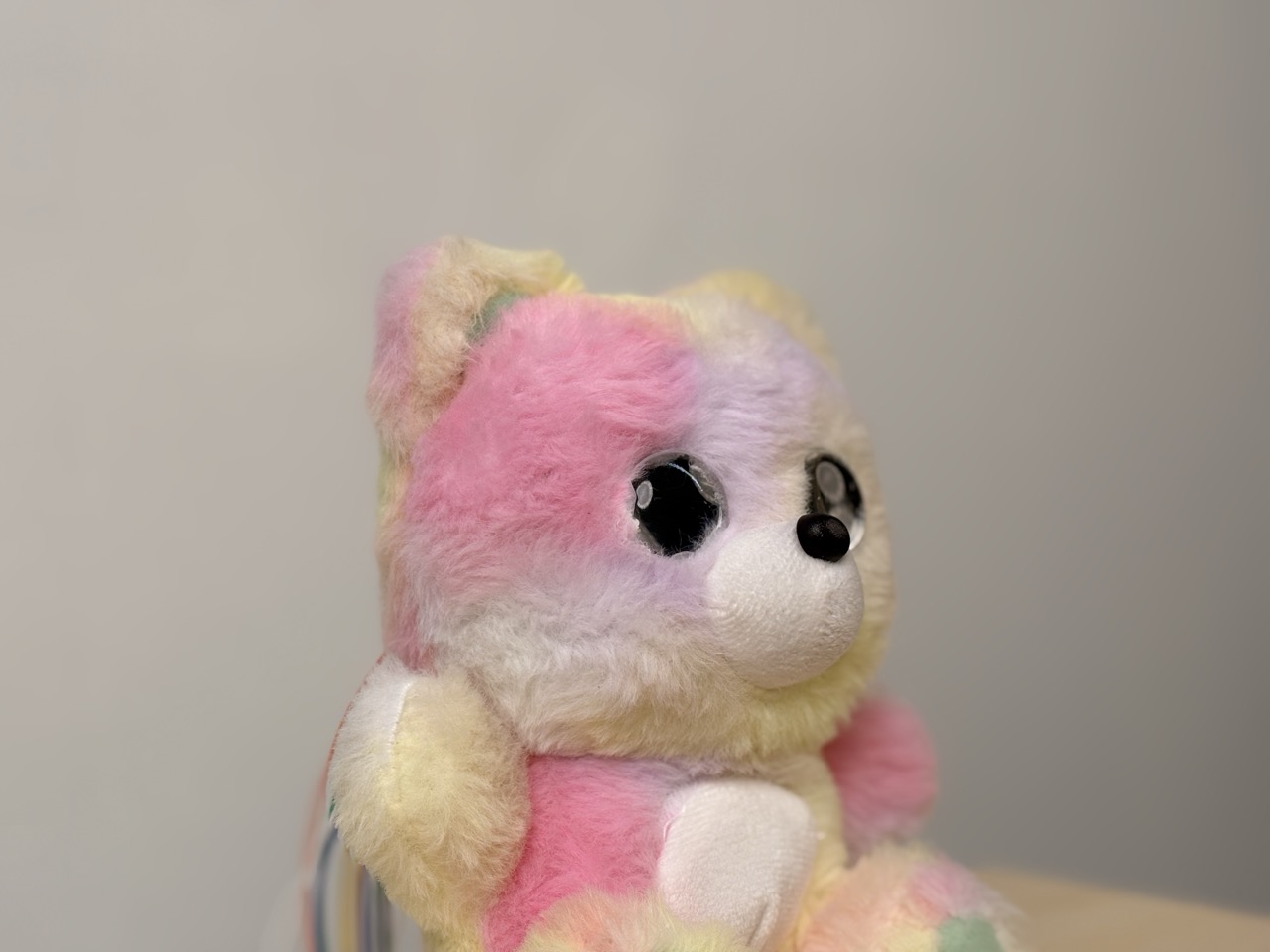
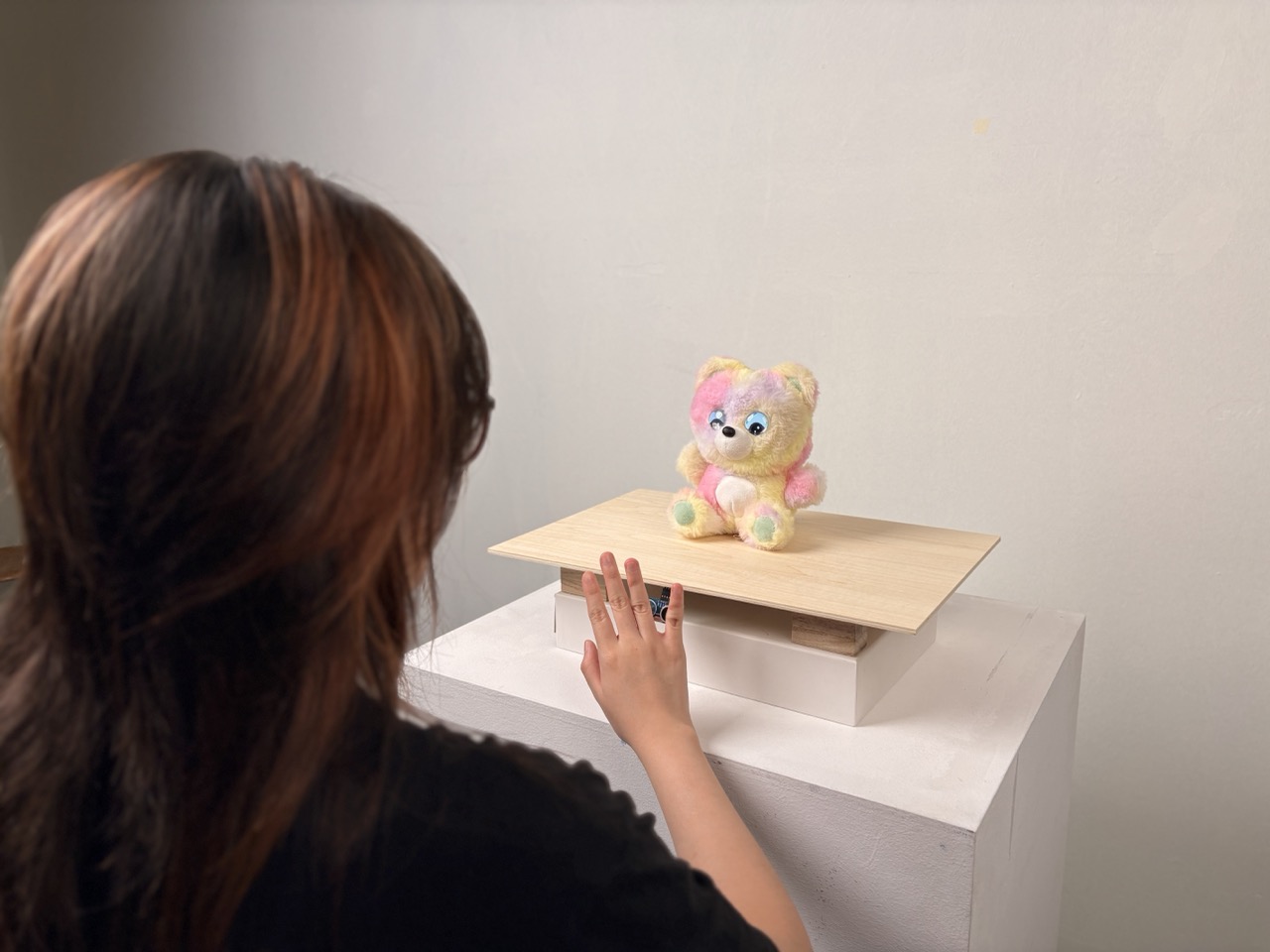
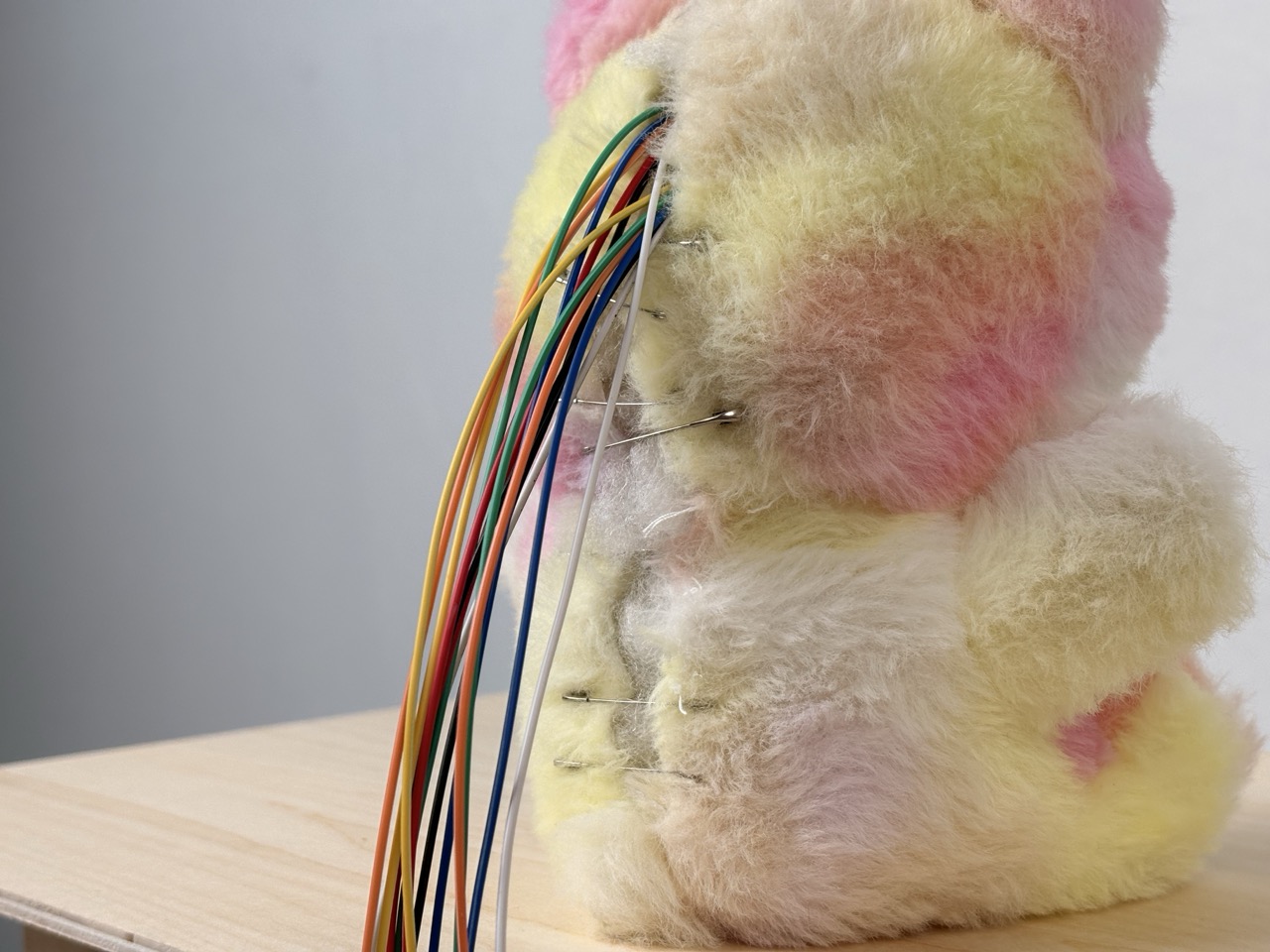
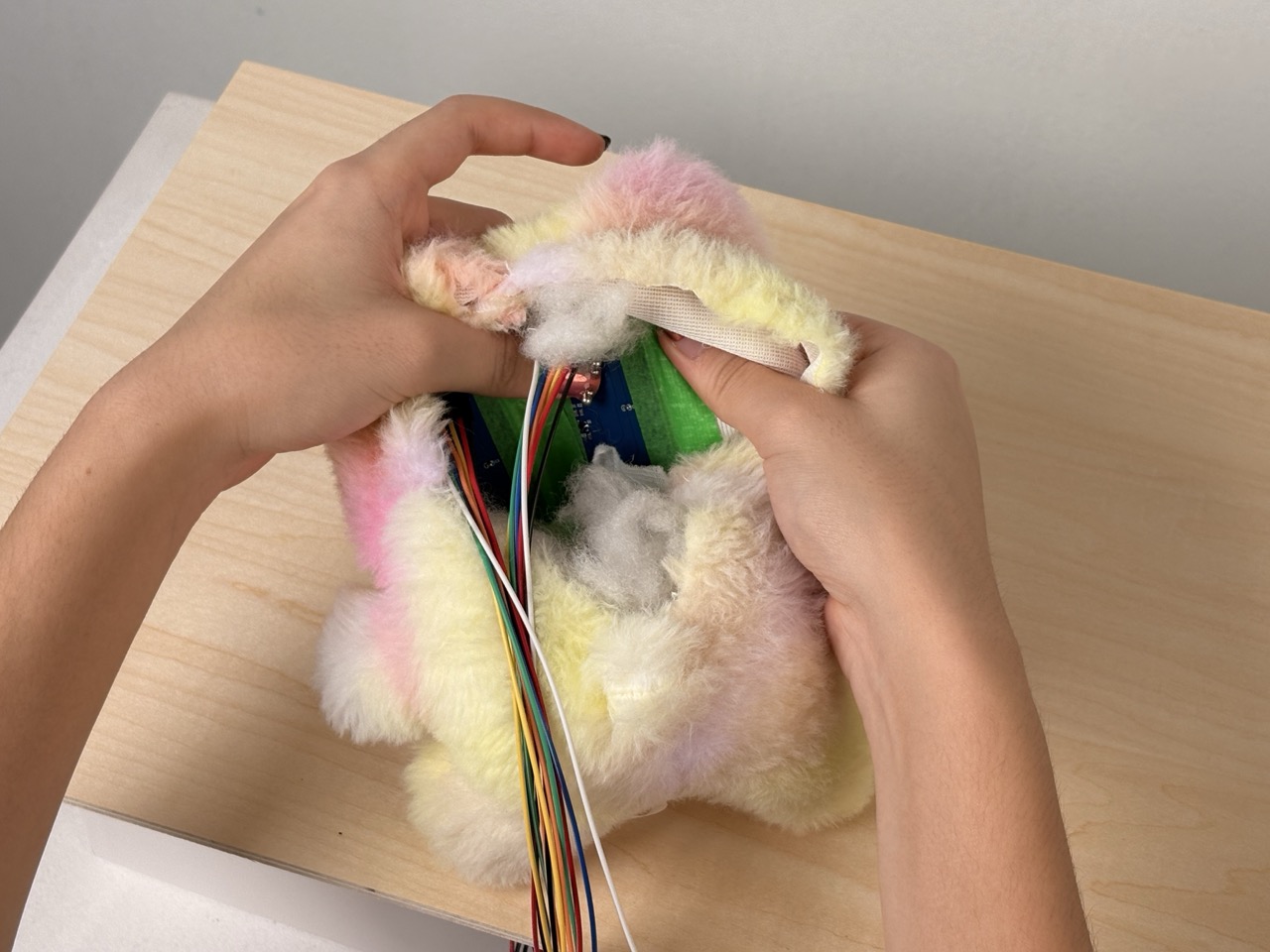
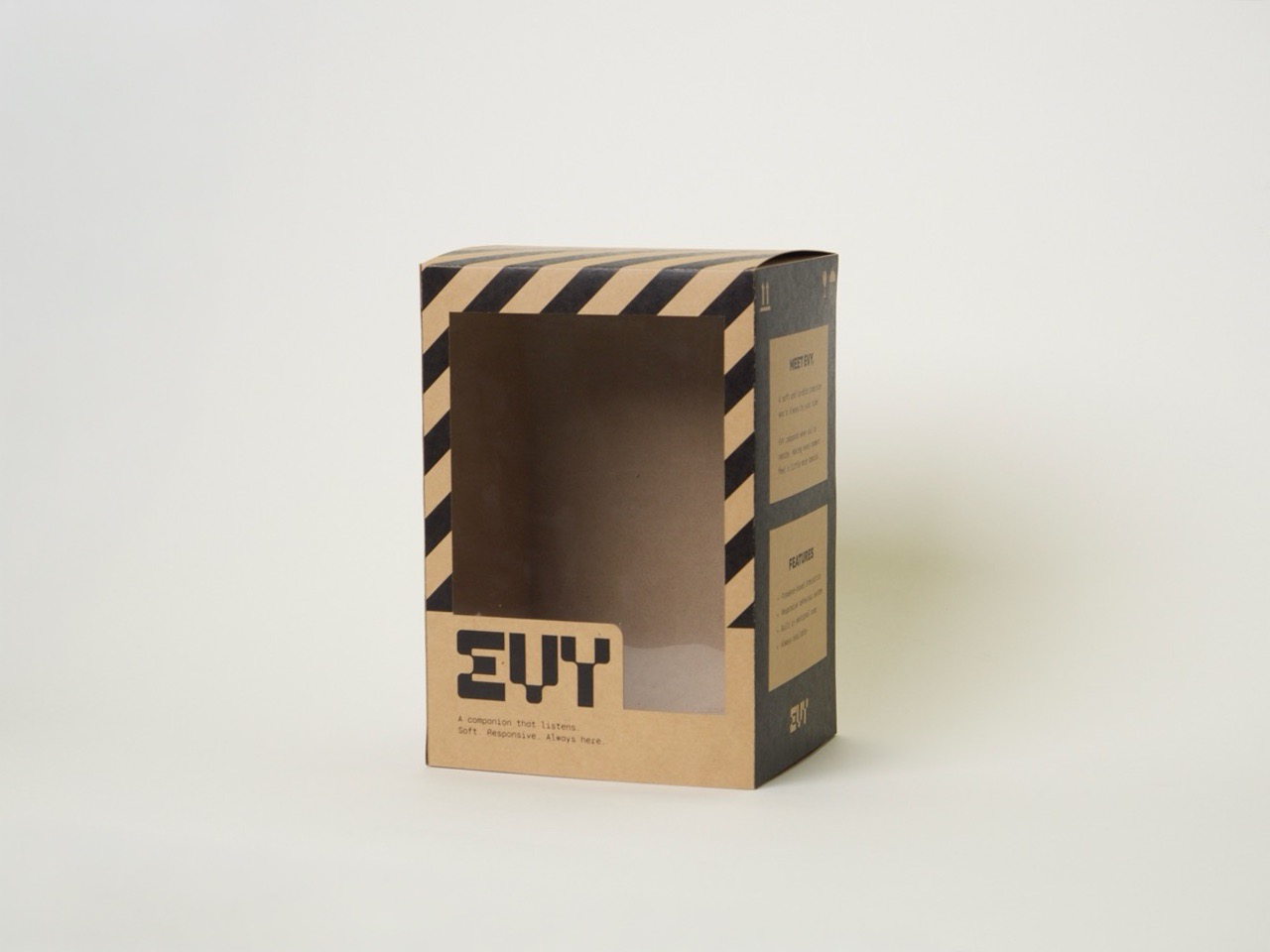
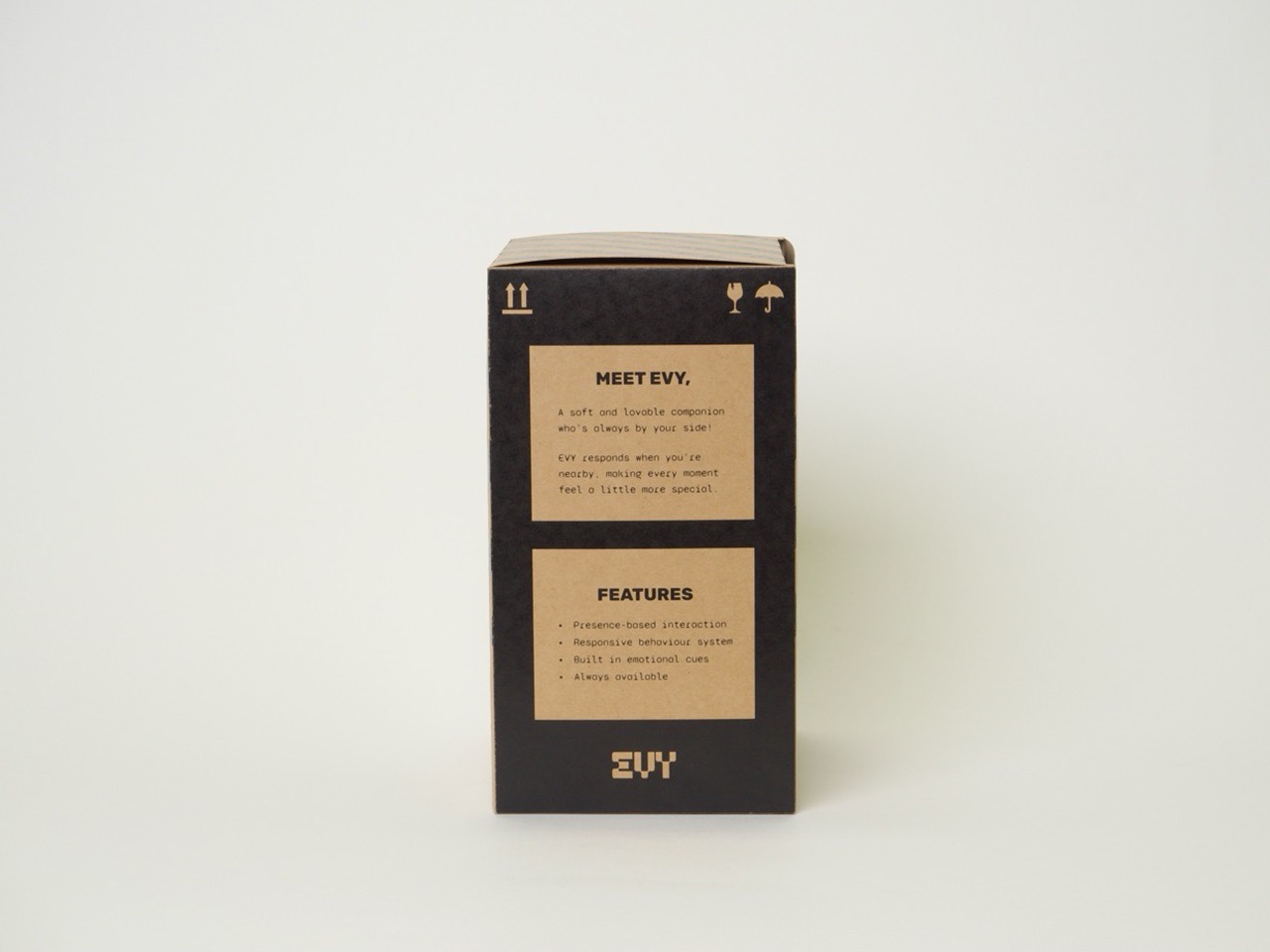
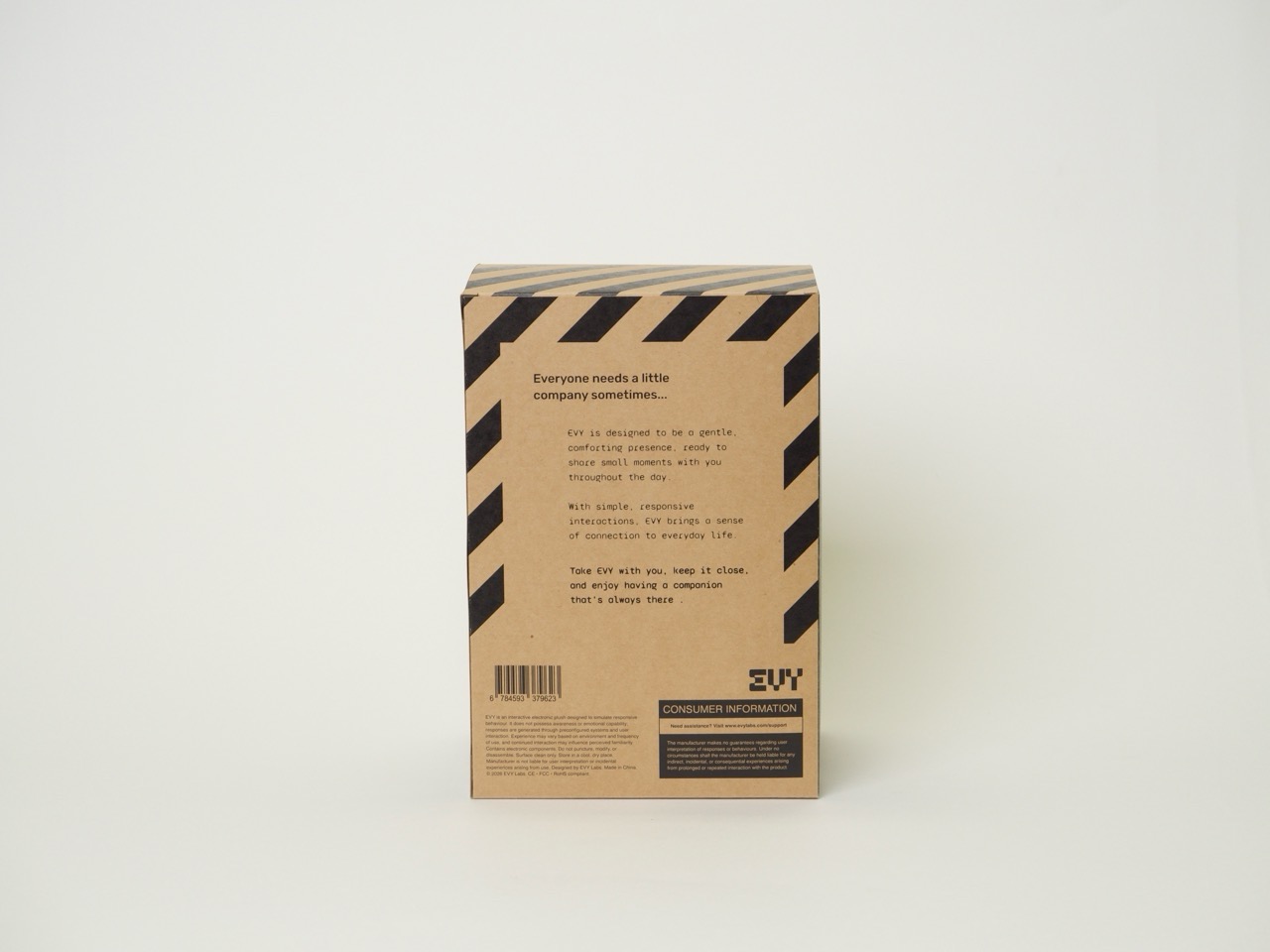
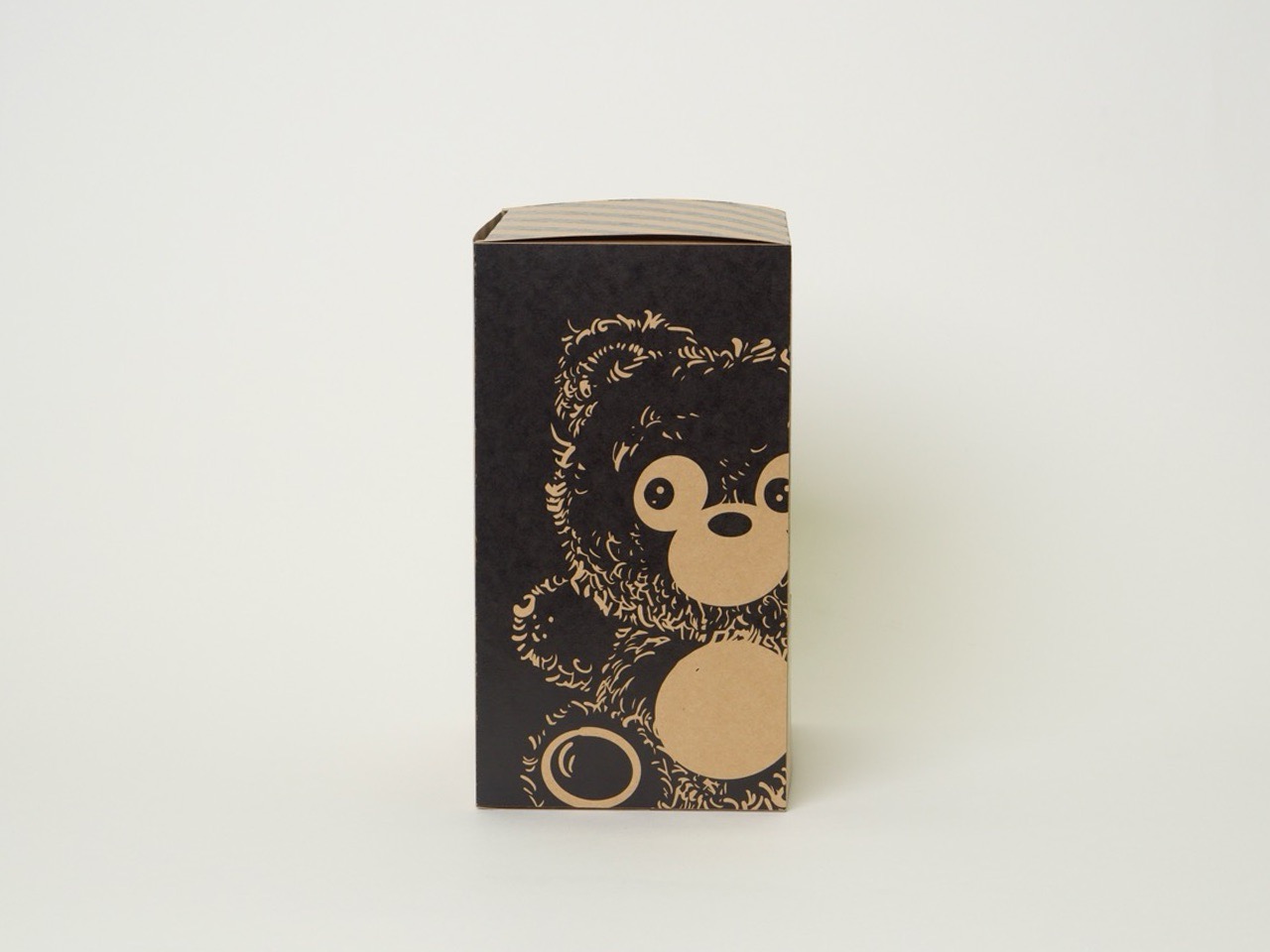
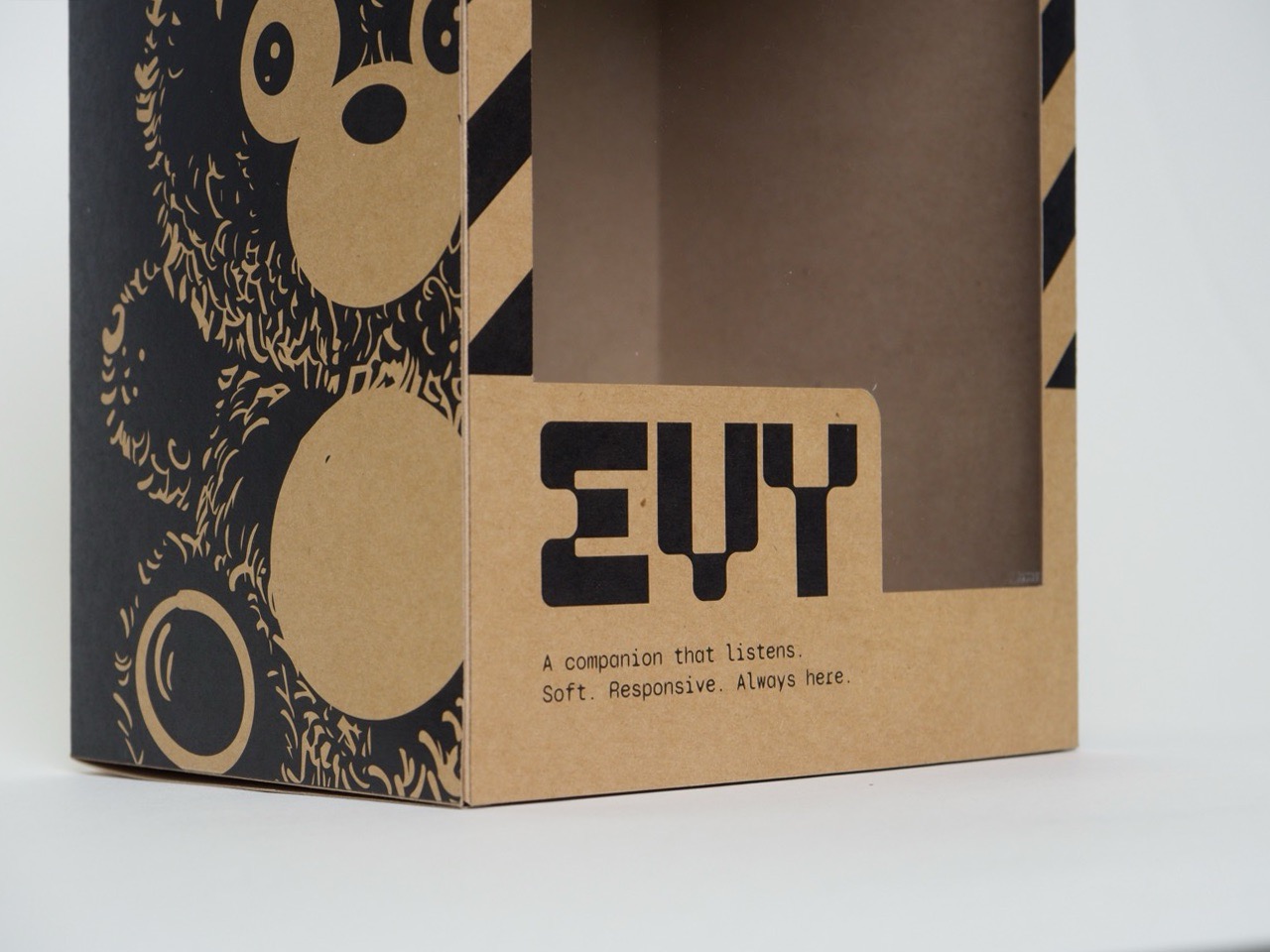
Finally, I wanted to give the watching bear a name to make it feel more like a character, and push it more as a product, as if companionship could be something to be bought. I named it "EVY" and created a box for it, as if it were a product that could be sold in stores. The box has a little window that shows the bear inside, and some text that describes what the bear is and how it works. The idea was to make it seem like a real product that people could buy, and to see how people would react to the idea of having a watching companion in their lives.
Through more informal conversations with people about EVY, I still received a mix of reactions. Some feedback was very interesting as some people said they would be concerned to actually see this type of product in stores. They said that it feels like an episode of Black Mirror, and was worried about how it would affect younger audiences in the future. Would it impact how children form relationships and or social skills? On the other hand, there were people who said they there might be potential for it to be used as a companion for aging populations who are lonely.
Conclusion
By the end of this semester, I was able to see how my watching object, now named EVY, could evoke a range of emotions and reactions, from curiosity and playfulness to discomfort and concern. I think it was really interesting to see how people responded to the idea of having a watching companion in their lives, and how it made them reflect on what AI companionship could look like in the future, both the good and the bad. By the end of this, it helped me understand the potential for AI companions, while also highlighting the ethical considerations that come with designing such products.